This website uses cookies

We use cookies and similar technologies on this website to analyze visits and to show you relevant messages on social media. By clicking 'Accept all' you give permission for their placement and for the processing of personal data obtained in this way, as stated in our privacy & cookie statement.

Our privacy & cookie statement:

The art world surrounding Escher

The art world surrounding Escher

Here you will find articles that explore how Escher’s work fits into art history and popular culture, as well as artists who have been influenced by him but whom he never met.

Fool the eye

Fool the eye

There has always been great interest worldwide in M. C. Escher's work. Articles about him and his art often speak of 'optical illusions’ and his work is almost automatically associated with that term. Understandable, even though the relationship between optical illusions and Escher's work differs from how optical illusions are generally explained.

Notable napkins

Notable napkins

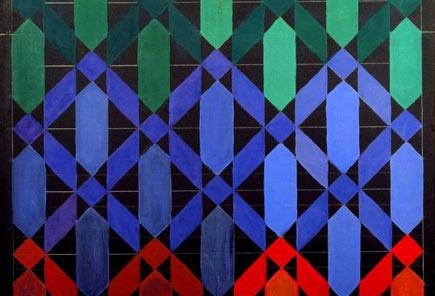
Escher in The Palace received a special donation: three napkins from the hand of artist and designer Chris Lebeau (1878-1945). These napkins, Refraction, Shoal of Fish and Apple, once belonged to M.C. Escher, and are on display until June 2025.

Julie de Graag

1877 - 1924

Julie de Graag

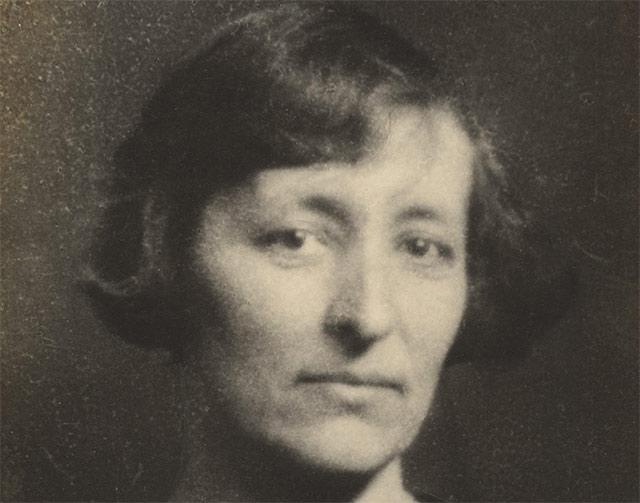
2024 marks the centenary of the death of Julie de Graag. This talented contemporary of M.C. Escher managed in her woodcuts to capture the essence of plants, animals and people with just a few details. The two artists shared a great love of nature, closely observing the world around them, and depicting it in their prints, each in their own unique way. 

Looking at old masters

Looking at old masters

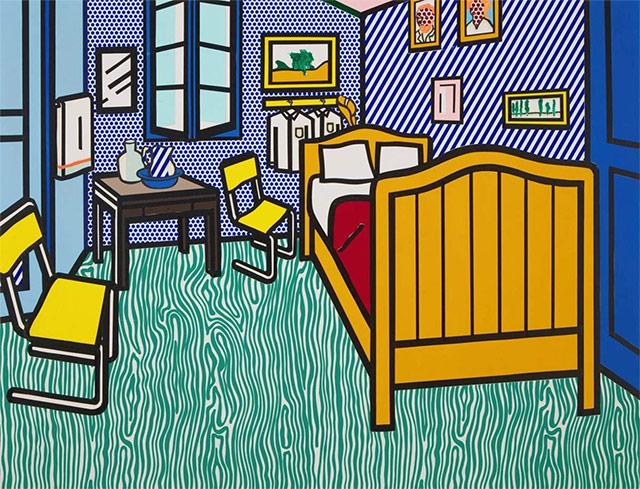
Inspiration can be taken not only from a direct mentor (who is essential for each and every art student) but also from masters from past eras. Looking to precedents produced by artists from before one’s time is extremely common. Working in the style of or imitating well-known pictures is one way for artists to draw on the techniques and ideas of their heroes and to challenge themselves by looking at art from another person’s perspective.

Magical polyhedra

Magical polyhedra

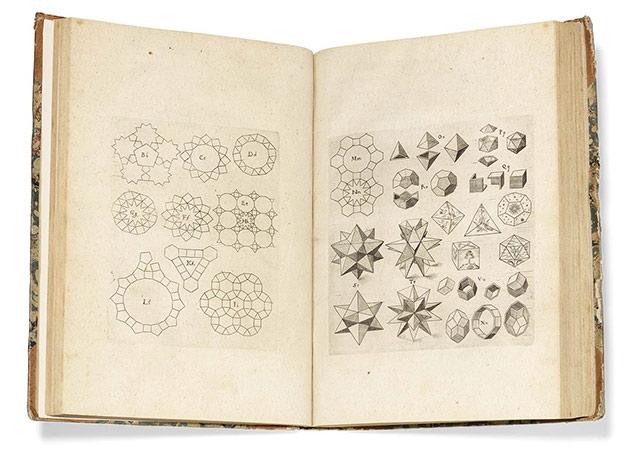
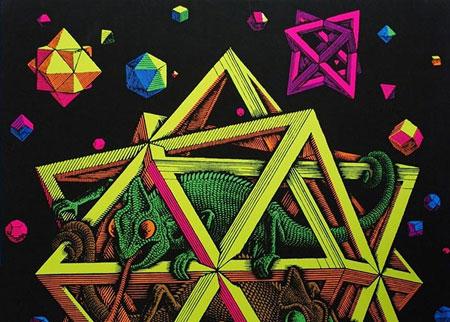
Flat surfaces were tremendously important to M.C. Escher. A two-dimensional blank sheet of paper gave him the opportunity to explore the infinite and to conjure illusions. On such sheets he would create deceptive three-dimensional worlds in which order and chaos are in conflict, just like in the real world. 

Escher and Rembrandt

Escher and Rembrandt

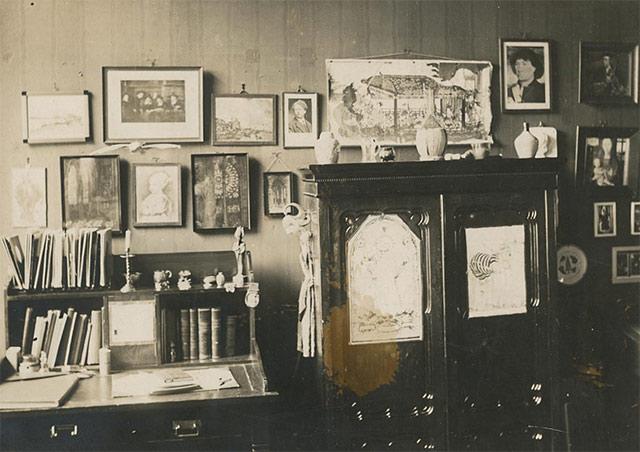
Escher's interest in Rembrandt began early on. He was intrigued by art as an adolescent, but had little curiosity for emerging movements such as Cubism and Dadaism. His preferences lay with the Late Middle Ages and the Renaissance. As well as with Rembrandt. As a 17-year-old, he already had a reproduction of one of Rembrandt's most famous paintings, The Sampling Officials (1662), hanging in his room in Arnhem.

Mirrored illusions

Mirrored illusions

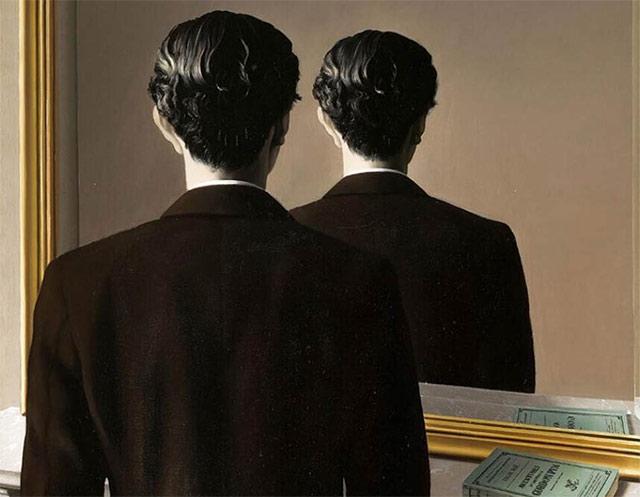
In general, mirrors reflect reality, but in the world of art, different laws apply. Certainly in the world of Maurits Cornelis Escher. Here, nothing is what it seems. His prints are instantly recognisable, but the man behind them was something of an enigma. 

In search of the experiment

In search of the experiment

The history of printmaking goes back for centuries. So it is no wonder that a great range of printmaking techniques have been developed over time. From woodcut to copper engraving and from mezzotint to screen printing. Moreover, many graphic artists have successfully added their own personal twist to this ancient craft.

A Parade of Portraits

A Parade of Portraits

During the time that Escher was a student at the School of Architecture and Decorative Arts, he was frequently taught how to make portraits. His teacher at the School of Architecture and Decorative Arts in Haarlem, Samuel Jessurun de Mesquita (1868-1944), taught him all he needed to know about printmaking, including plenty of lessons in portraying humans, and animals

Richard Roland Holst

1868 - 1938

Richard Roland Holst

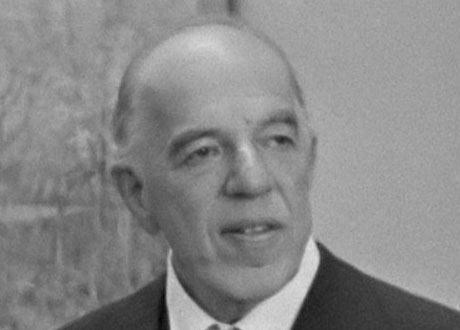
The term homo universalis, meaning universal man, aka polymath, was coined in the Renaissance by the writer, philosopher and musician Leon Battista Alberti (1404-1472). The term is at times applied incorrectly, but Richard Roland Holst (1868-1938) definitely qualifies.

Oscar Reutersvärd

1915 - 2002

Oscar Reutersvärd

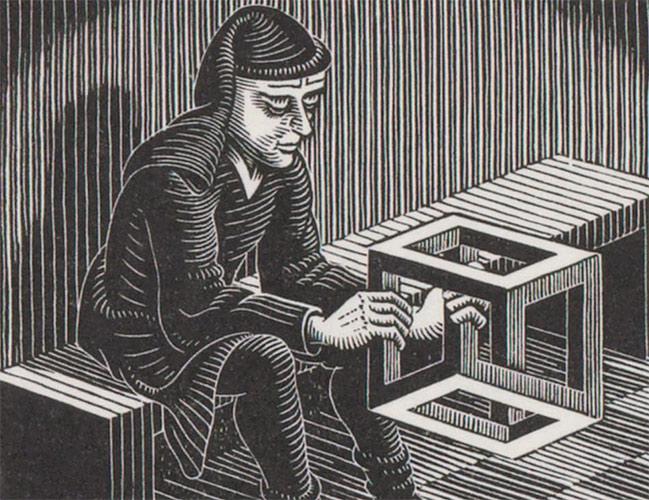
With Belvedere, Waterfall and Ascending and Descending, M.C. Escher created three iconic prints based on impossible figures: a cube, a triangle and a staircase. On 2 February 2002, the Swedish artist and art historian Oscar Reutersvärd, who can be regarded as the forefather of the impossible figure, passed away. 

Giovanni Battista Piranesi

1720 - 1778

Giovanni Battista Piranesi

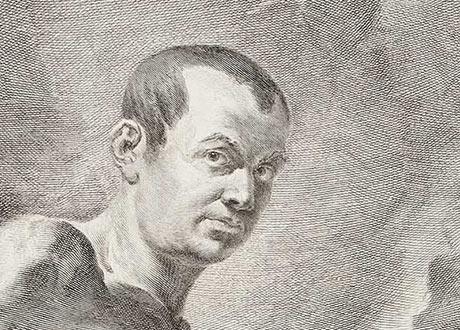
9 November 1778 saw the death of Giovanni Battista Piranesi, the Italian artist and architect regarded as the greatest graphic artist of his time. His fame was primarily due to his Vedute di Roma, a series of etchings with impressive views of the ruins and monuments of Rome. But above all it is Piranesi's famous fantasy prints about prisons, the Carceri d'Invenzione, that continue to appeal to the imagination so much to this day. Escher was a great admirer.

Escher en The Rolling Stones

1969

Escher en The Rolling Stones

50 years ago, on 5 December 1969, The Rolling Stones launched the album Let It Bleed. It is one of the most famous Stones albums, featuring classic songs like Gimme Shelter, Midnight Rambler and You Can't Always Get What You Want. The cover features a cake and a record player, but it could have been a print by Escher.

Ernst Gombrich

1909 - 2001

Ernst Gombrich

On July 29, 1961, the article How to read a painting (Adventures of the mind) by art historian Ernst Gombrich appears in the famous American magazine The Saturday Evening Post. In this article Gombrich describes a number of Escher's prints in detail. The sub-heading reads: "By visual paradoxes the artist shocks the viewer into the realization that there is more to art than meets the eye." A phrase that can clearly be related to Escher. The article generated a lot of extra interest in Escher's work.


The Plague by Albert Camus

The Plague by Albert Camus

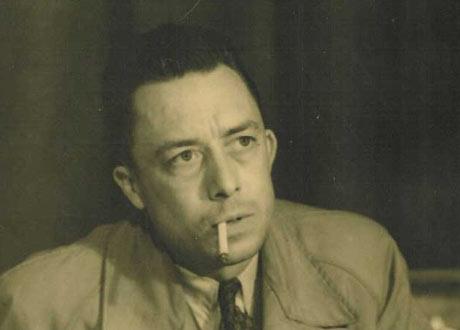
French philosopher, journalist, writer and Nobel laureate Albert Camus wrote his novel The Plague in 1947. The book was a direct response to the horrors of World War II. The disease itself and its defeat are a metaphor for the fight against the Nazis, the brown plague.

David Umemoto

David Umemoto

On 14 November 2019, the exhibition David Umemoto: Architect of the Impossible opened in Escher in The Palace. David Umemoto is a Canadian sculptor with a background in architecture. His mysterious sculptures of impossible buildings were exhibited side by side with the work of M.C. Escher. The printmaker has been an inspiration throughout Umemoto’s career:
 

Philippe Druillet and Lone Sloane

Philippe Druillet and Lone Sloane

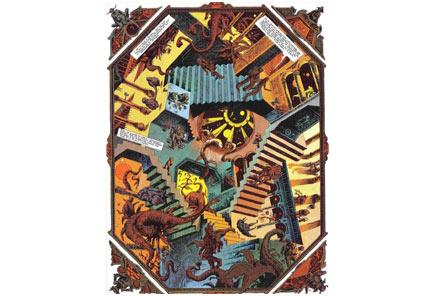
Philippe Druillet, born on 28 June 1944, is known for his baroque drawings and bizarre science fiction stories. After having worked as a photographer for several years, Druillet made his debut in comics in 1966 with Lone Sloane, le Mystère des Abîmes. The book contains a page featuring an intriguing and exuberant variation on M.C. Escher’s Relativity (1953).

J.R.R. Tolkien

1892 - 1973

J.R.R. Tolkien

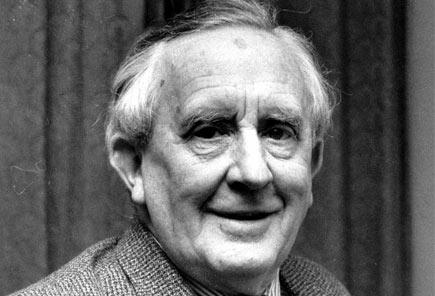
In June 1962, Escher wrote an ode to the British writer and academic John Ronald Reuel Tolkien, who became world-famous for his fantasy series The Hobbit, The Lord of the Rings, and the posthumously published The Silmarillion. Earlier that year, his son Arthur had given him The Hobbit as a gift, a book he read avidly whilst confined to bed.

The Brexit labyrinth

The Brexit labyrinth

Since the Brexit referendum on 23 June 2016, the United Kingdom has been in a constant state of uncertainty about the future of the nation and its relationship with mainland Europe. Although the mood around Brexit is still very pessimistic, there is one group of professionals that is getting some fun out of it. For almost three years the cartoonists have been producing an inexhaustible stream of political prints on Brexit. And M.C. Escher has been playing a notable role in this.

Giacomo Balla

1871 - 1958

Giacomo Balla

On 1 March 1958, Giacomo Balla, one of the most important artists of futurism, died. Escher probably did not know him personally, but he was familiar with his work. There are a number of surprising similarities between the futurist Balla and the early work of the graphic artist Escher.

Leonardo da Vinci

1452 - 1519

Leonardo da Vinci

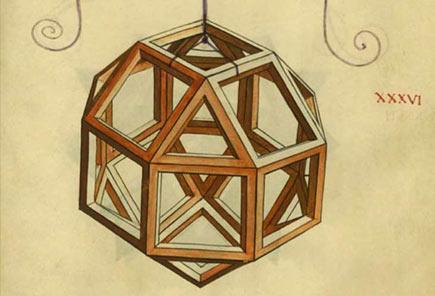
In 2018, Teylers Museum hosted a major retrospective of original works by the Italian Renaissance artist Leonardo da Vinci (1452–1519), featuring 33 drawings by the master and an equal number of works by his contemporaries. Da Vinci did not view art and science as separate ‘worlds’. For him, they were inextricably linked. It is at this intersection that Da Vinci and Escher meet.

Hokusai's big wave

1760 - 1849

Hokusai's big wave

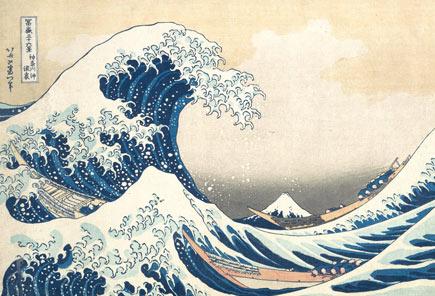
In 1957, Escher wrote about his sea voyages and how much he enjoyed the waves. He would have loved to be able to draw them well himself ('those apparently shapeless, chaotic glories') but felt he fell short. He realised, however, that Katsushika Hokusai could do just that. This masterful artist knew better than anyone how to capture the dynamism of the raging sea in print.

Lewis Carroll

1832 - 1898

Lewis Carroll

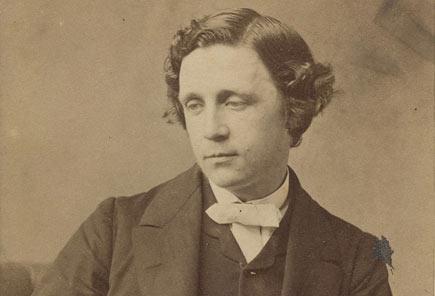
On 14 January 1898, Lewis Carroll, the British author who achieved worldwide fame with Alice’s Adventures in Wonderland and Through the Looking-Glass, died. Carroll passed away five months before Escher was born. Although their lives never crossed paths, there are many similarities between the writer and the artist.