This website uses cookies

We use cookies and similar technologies on this website to analyze visits and to show you relevant messages on social media. By clicking 'Accept all' you give permission for their placement and for the processing of personal data obtained in this way, as stated in our privacy & cookie statement.

Our privacy & cookie statement:

The people around Escher

The people around Escher

Here you will find articles about people who played an artistic or professional role in Escher’s life. He knew most of them personally.

Jetta

Jetta

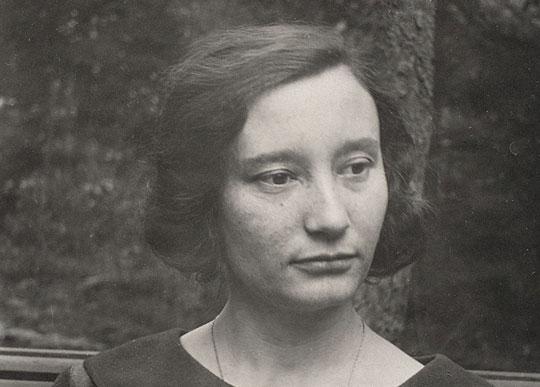
On 12 June 1924, Maurits Cornelis Escher marries Giulietta Umiker, given name Jetta, in the Italian seaside town of Viareggio, not far from Pisa. Four days later, on 16 June, at the urgent request of Jetta, a convalidation ceremony or "blessing of the marriage" was held in a room of a Catholic school. More than a year before their marriage, Escher met her for the first time in hotel Albergo del Toro in Ravello on the Amalfi coast, not far from Naples. Escher was on his first long tour of Italy. Jetta, who was only six months older than him, was travelling with her parents. 
Albert E. Bosman

Albert E. Bosman

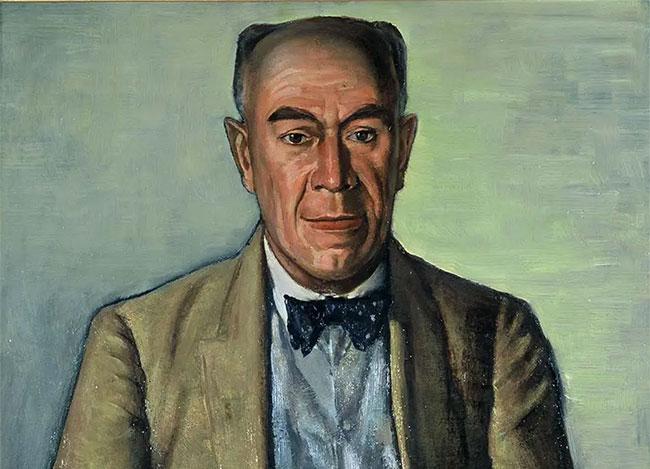
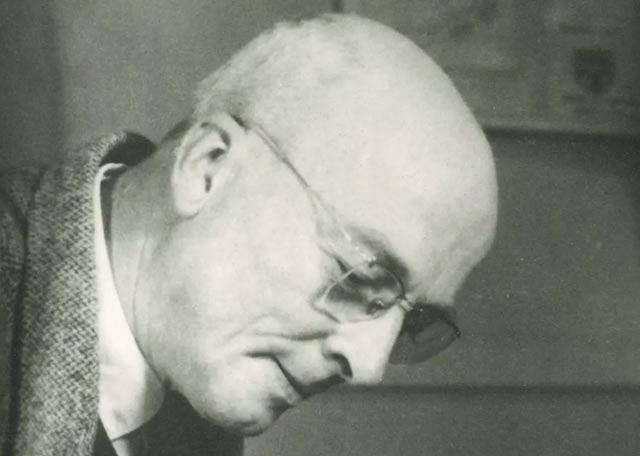
How to depict infinity on paper was something that fascinated both M.C. Escher and Albert E. Bosman. Albert Bosman (1891-1961) was an engineer and maths teacher who also became an artist. Mathematics lay at the core of his work. Bosman and Escher were neighbours in Baarn (NL), where they bonded over a mutual interest in mathematical shapes, ideas and principles.

Tony de Ridder

Tony de Ridder

Tony de Ridder (1886-1971) was a poet and author. She spent much of her life in Oosterbeek, in the east of the Netherlands, where she got to know the Escher family. As the daughter of a pastor, she was raised in the Christian faith, and her religion became the core of her life. 

Eugène Strens

Eugène Strens

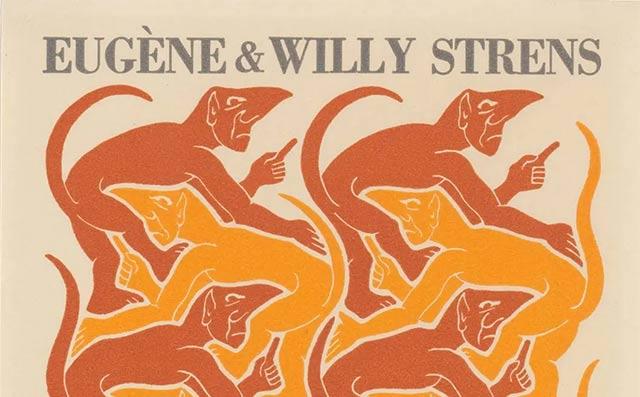
In October 1952, M.C. Escher created a series of woodcuts on the subject of the four elements. It was a commissioned work for collector and graphic art fanatic Eugène Strens and his wife Willy. Eugène Strens (1899 - 1980) was trained as an engineer, but his great passion was graphic art. 

Hein ‘s-Gravesande

Hein ‘s-Gravesande

On 2 July 1965, journalist, poet, critic and essayist G.H. 's-Gravesande, known by his nickname Hein, died. He published several articles and a booklet on the man whom he also greatly admired as an artist. Hein 's-Gravesande was one of the first critics to pay serious attention to the work of M.C. Escher, and the graphic artist owes much to him.

Graphic arts friends

Graphic arts friends

M.C. Escher is undoubtedly the most famous graphic artist in the Netherlands. But he was certainly not the only one. Escher was in contact with fellow graphic artists and in a number of cases this also led to joint exhibitions. He always appreciated meeting graphic artists who were also masters of their craft. He liked to surround himself with these craftsmen.
 

Samuel Jessurun de Mesquita

Samuel Jessurun de Mesquita

Samuel Jessurun de Mesquita (1868-1944) was a gifted artist, painter and printmaker with an idiosyncratic signature who occupies a special place in the canon of art. But above all he is the discoverer of M.C. Escher, the man who made the architecture student choose the profession that would make him world-famous. 

Cornelius V.S. Roosevelt

Cornelius V.S. Roosevelt

Cornelius Van Schaack Roosevelt was born on 23 October 1915. He was a man with many hobbies, though his greatest love was the work of M.C. Escher. From the moment he set eyes on some Escher prints in 1954 he was captivated and would go on to become an obsessive collector of everything that had anything to do with the graphic artist: prints, reproductions, letters, books, newspaper articles, and all kinds of Escher products. But the two also became personal friends, and Roosevelt became a confidant that Escher would often rely on.

Jurriaan Andriessen

Jurriaan Andriessen

On 23 August 1996, the composer Jurriaan Andriessen, a descendant of a well-known family of artists, died. A good example of his versatility is the symphony Time Spirit, a musical theatre piece written for TV to which a clarinettist is put centre stage. A symphony orchestra, ballet dancers and the then emerging pop group Focus (with Thijs van Leer) surround this central figure. The symphony was accompanied by 34 slide projections of prints by Escher. 

Roger Penrose

Roger Penrose

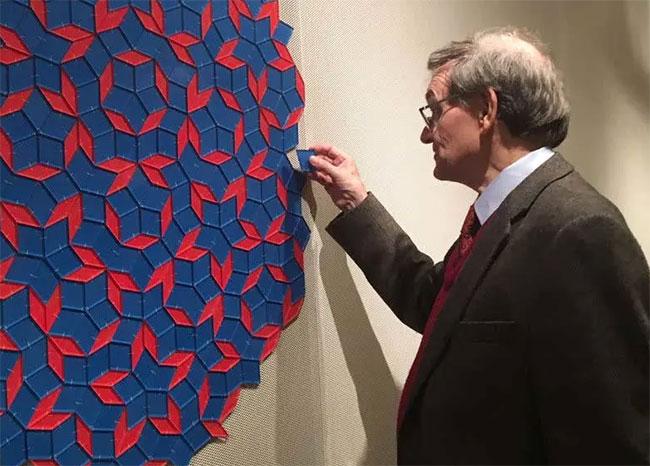
In 1962 the British mathematician Roger Penrose travelled to the Netherlands and he visited Escher in his house in Baarn. The two had got to know each other after Penrose saw work by Escher during the International Mathematical Congress in 1954. They started an exchange of letters that would lead to the print Ascending and Descending in 1960. Throughout his career Penrose was fascinated by tessellations, a fascination that he shared with Escher. 

Gottfried Wilhelm Locher

Gottfried Wilhelm Locher

Gottfried Wilhelm Locher was a man whose name is barely known to the general public, but who has been of immense importance to the legacy of M.C. Escher. Locher already had an illustrious career in anthropology when he made a number of important contributions to this legacy. He gave lectures and wrote articles about Escher, presenting brilliant interpretations of the richness of his art. Locher saw Escher as the artist to have managed to bridge the gap between art and science.

Gerd Arntz

Gerd Arntz

On 4 December 1988 the graphic designer Gerd Arntz passed away. He was one of Escher’s best friends. With his distinctive style as a graphic artist, Arntz was an outsider among his colleagues. Just as Escher was. Both ‘outsiders’ appreciated each other’s work. The two corresponded for years, trading experiences and ideas and commenting on each other’s work. They also met at their respective homes and Arntz continued to visit Escher in the ‘Rosa Spier Huis’ (retirement home for Dutch artists), where Escher died in 1972.

Albert Flocon

Albert Flocon

In March 1965 Escher met the French artist and professor Albert Flocon, lecturer at the prestigious École des Beaux-Arts in Paris. Flocon mainly created copper engravings and, like Escher, he was fascinated by the mystery of perspective. The meeting with Flocon proved to be of great importance to Escher. Flocon became an ambassador for his work, a liaison. Just like Charles Alldredge did in the United States. The professor personally mediated on the sale of prints and an Escher exhibition that was to be organised in Paris.

Bruno Ernst

Bruno Ernst

Albert Bosman, Escher’s neighbour across the street in Baarn, introduced him to Hans de Rijk. Escher came to know this man of many pseudonyms as Brother Erich, a member of the congregation of Saint Louis in Oudenbosch. This Erich was fascinated by the print Up and Down, which hung on the wall of his classroom. He knew Albert Bosman, the man who brought artist and admirer together. It was the start of a lifelong friendship. .


Jan Greshoff

Jan Greshoff

December 1938 was an ice-cold month in Brussels. A perfect setting for a little woodcut (18 x 14 cm) which Escher created shortly before for the Dutch critic and poet Jan Greshoff, who also lived in Brussels. He worked there as a cultural correspondent to the Nieuwe Rotterdamsche Courant and Het Vaderland. 
 

Charles Alldredge

Charles Alldredge

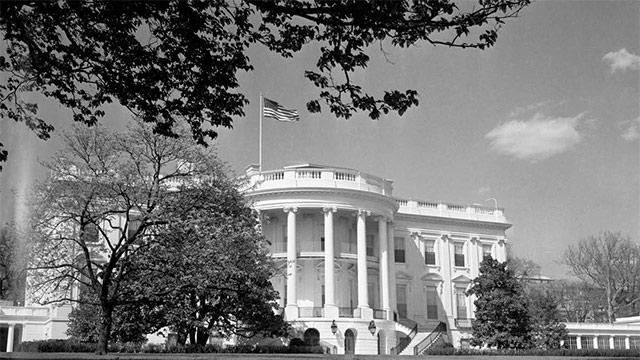
Escher’s first solo exhibition was held in the United States, in the Whyte Gallery in Washington, in October and November 1954. It was an initiative of the American Charles Alldredge, who had become a fan and collector after reading articles about Escher in magazines Time and Life in 1951.