
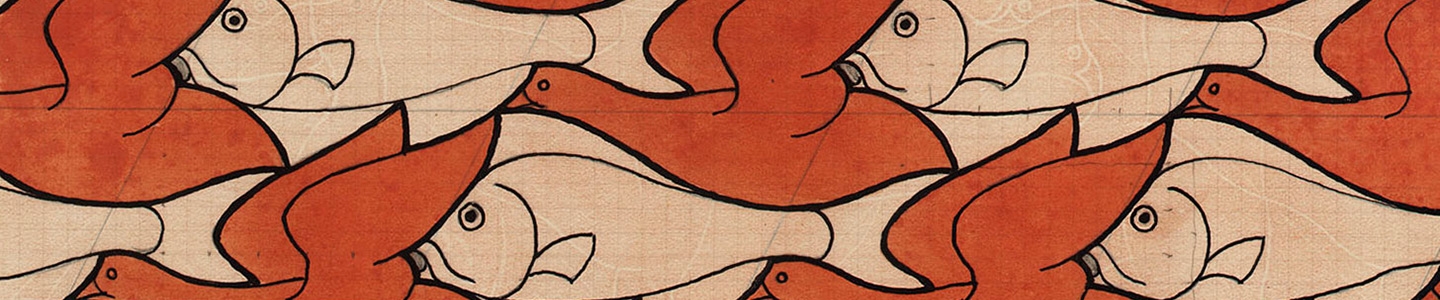
M.C. Escher is renowned for his extraordinary graphic works in which he plays with perspective, space and repetition. His prints often depict situations that seem logical but are in fact impossible. Escher is also known for his tessellations, in which he makes shapes, often elements from nature, fit together perfectly. Through the combination of art and mathematical ideas, his work has had a worldwide influence, not only in the art world but also in education and in the development of films and games. However, it is less well known that he was inspired by Islamic architecture and mosaic patterns after two visits to the medieval fortress and palace complex Alhambra in Granada, Spain. In the colourful patterns on ceramics that he sees during his travels, he recognises his own newly awakened quest for rhythm, repetition and transformation. This discovery has an enormous impact on him and forms the starting point for his intensive research into tessellations. These infinitely repeating motifs form a visual language that continues to play a central role in his drawings and prints until the end of his life.
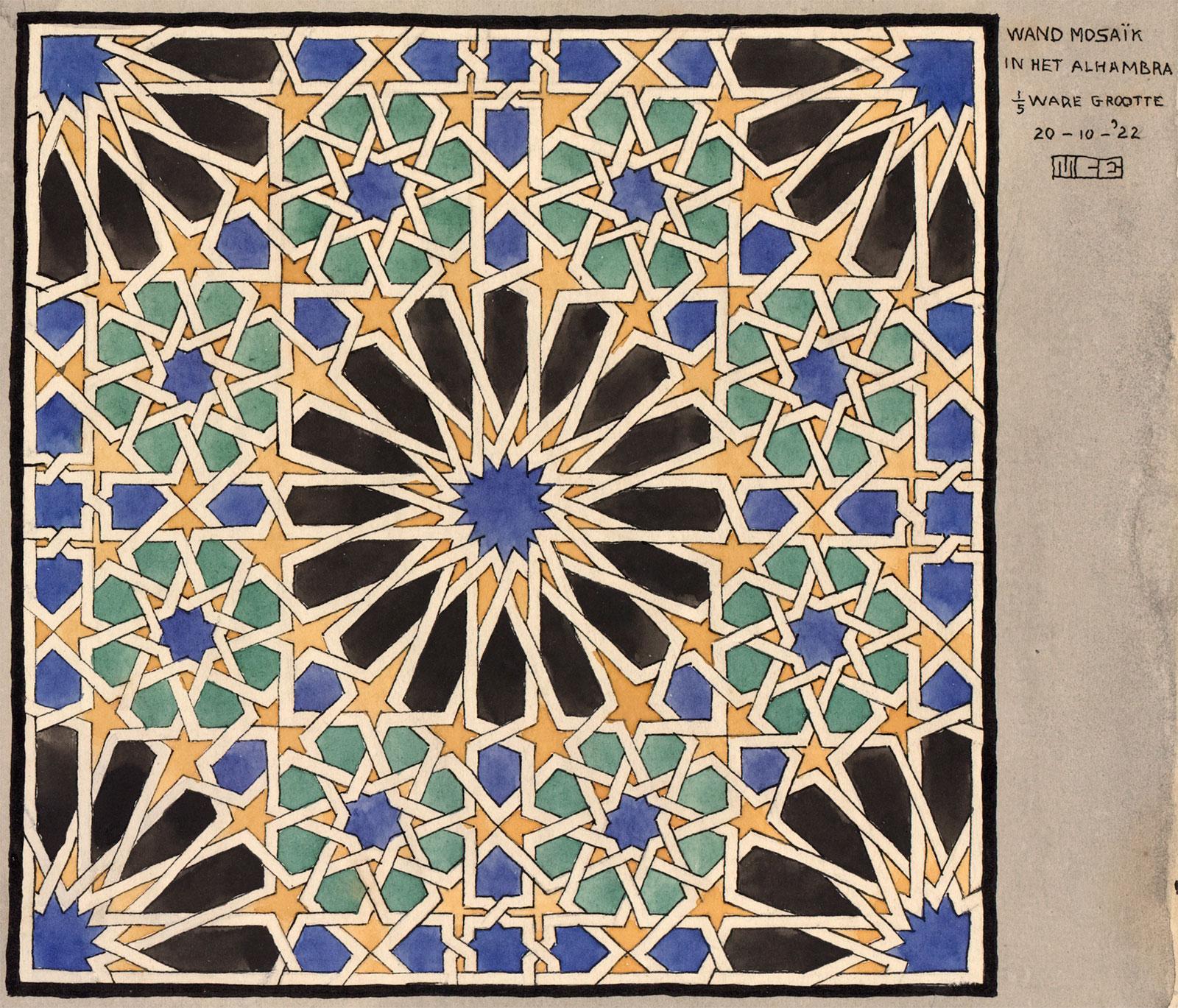
M.C. Escher, Wall mosaic in the Alhambra, watercolour and ink on paper, 20 October 1922
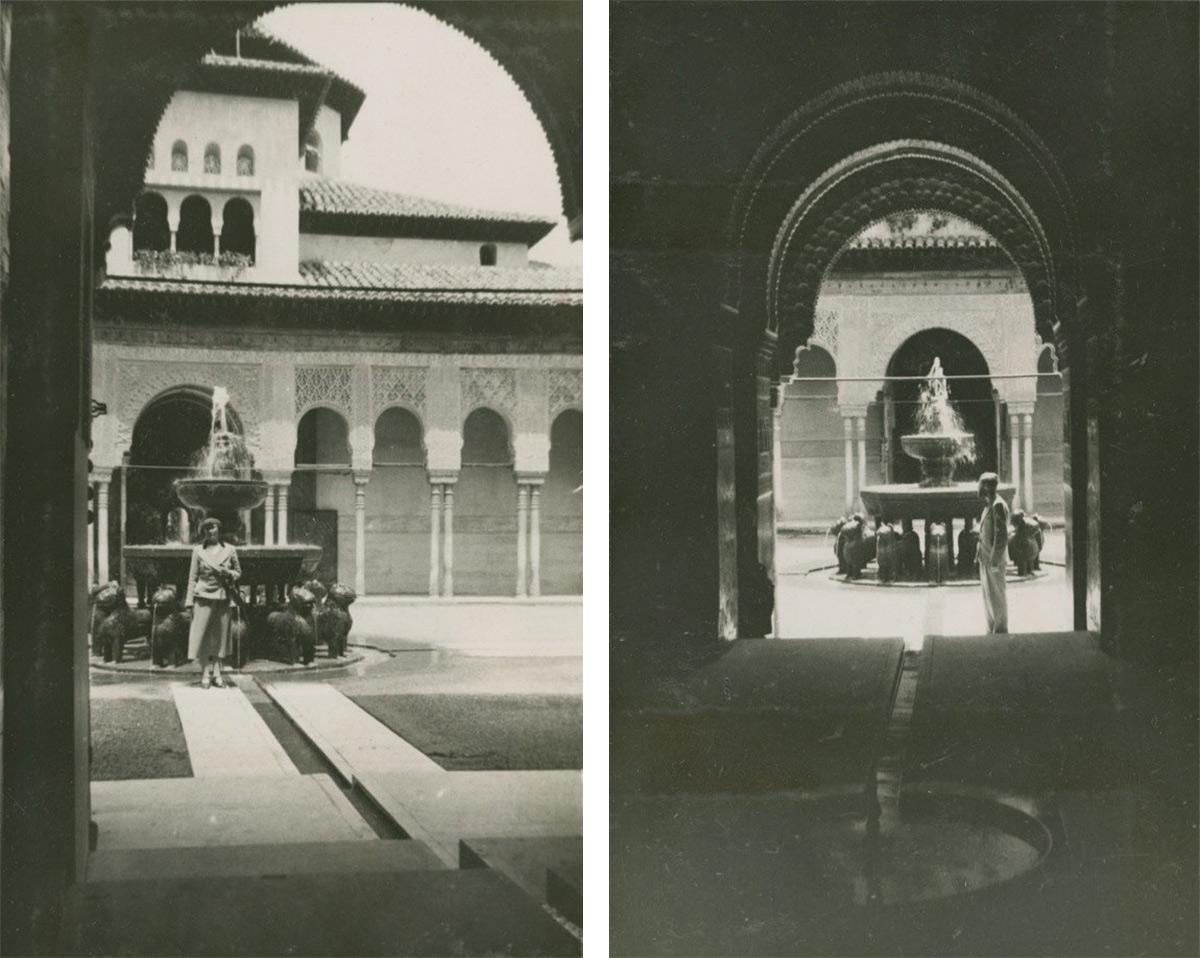
Photographs of M.C. Escher and his wife Jetta at the Alhambra, 26 March 1936
Ninety years after Escher's last visit to the Alhambra, Escher in The Palace presents an exhibition that connects this historical story with the present. Instead of focusing exclusively on the influence of the Alhambra on Escher, the museum has deliberately opted for a broader approach: bringing together Escher's work with that of contemporary artists who relate to Islamic cultural heritage in various ways. With a wide variety of disciplines – from painting and sculpture to photography, ceramics, paper art, fashion and textiles – Escher & Islamic Contemporary Culture displays a rich visual language that is still relatively rare in Dutch museums. The works in the exhibition enter into a new dialogue with Escher's work and the infinite fascination with Islamic patterns that continues to influence contemporary culture to this day.
The exhibition features 30 works by 20 national and international artists, including Fatima Barznge, Emin Batman, Farwa Moledina, Leila Nazarian, Mounir Raji, Shehzil Malik, Suleika Mueller, Amine Asselman and Karim Adduchi. Many of the international works are being shown in the Netherlands for the first time. The exhibition focuses on a wide variety of artists, all of whom are united by art and come from many different cultures. Escher in The Palace seeks to find the connection within this plurality of creativity: unity in diversity.

Amine Asselman, Metamorphosis, Zellige technique, 2023
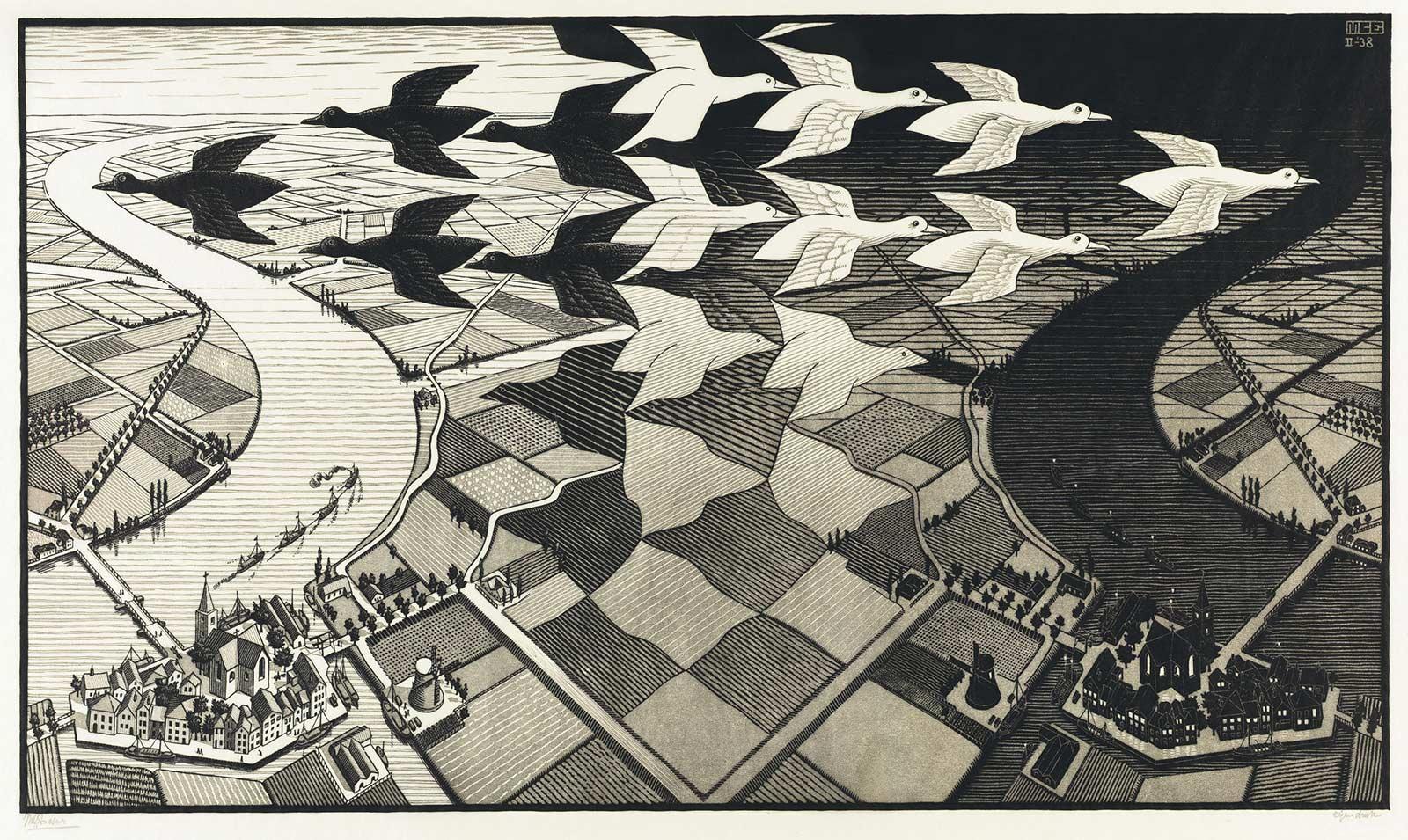
M.C. Escher, Day and Night, woodcut in black and grey, printed from two blocks, February 1938
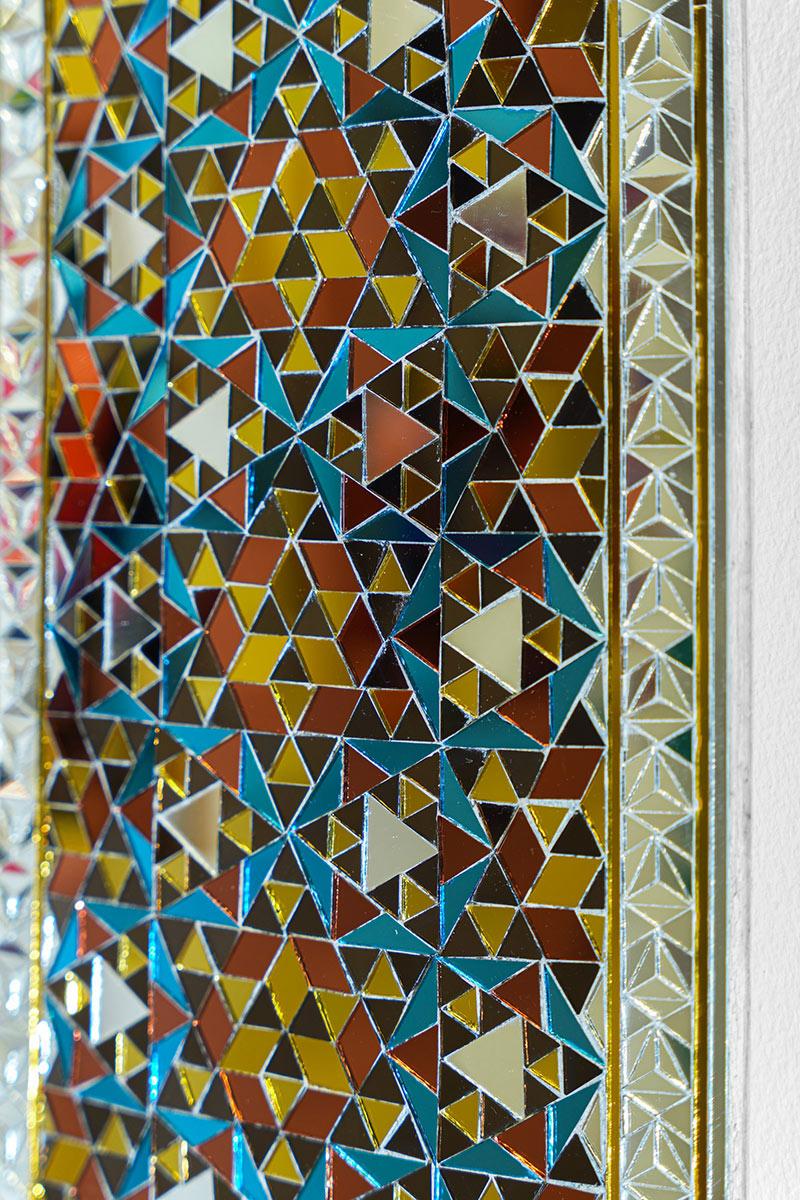
Leila Nazarian, Untitled (12) from Mirrored Horizons (detail), mirror mosaic on skateboard, 2025