This website uses cookies

We use cookies and similar technologies on this website to analyze visits and to show you relevant messages on social media. By clicking 'Accept all' you give permission for their placement and for the processing of personal data obtained in this way, as stated in our privacy & cookie statement.

Our privacy & cookie statement:

Escher's little spoon
4 August 2015

Escher's little spoon

M.C. Escher decided at an early age to become a printmaker rather than a painter or sculptor. He eventually produced 449 prints. He produced about five times as many woodcuts and wood engravings as lithographs.

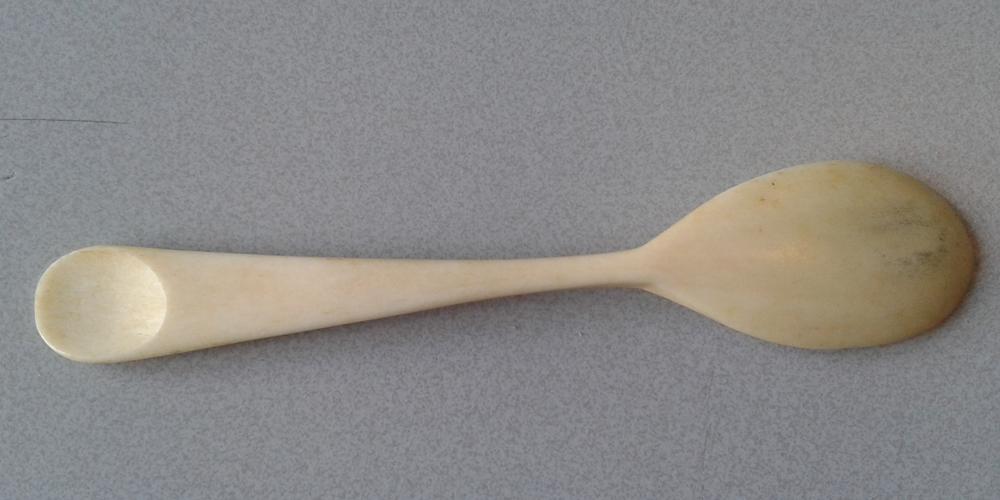
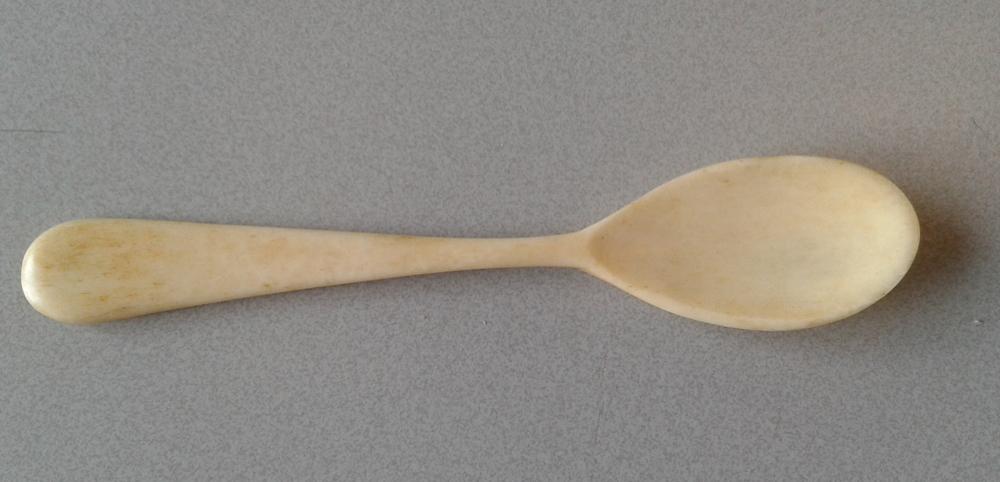
Bone egg spoon, used by Escher

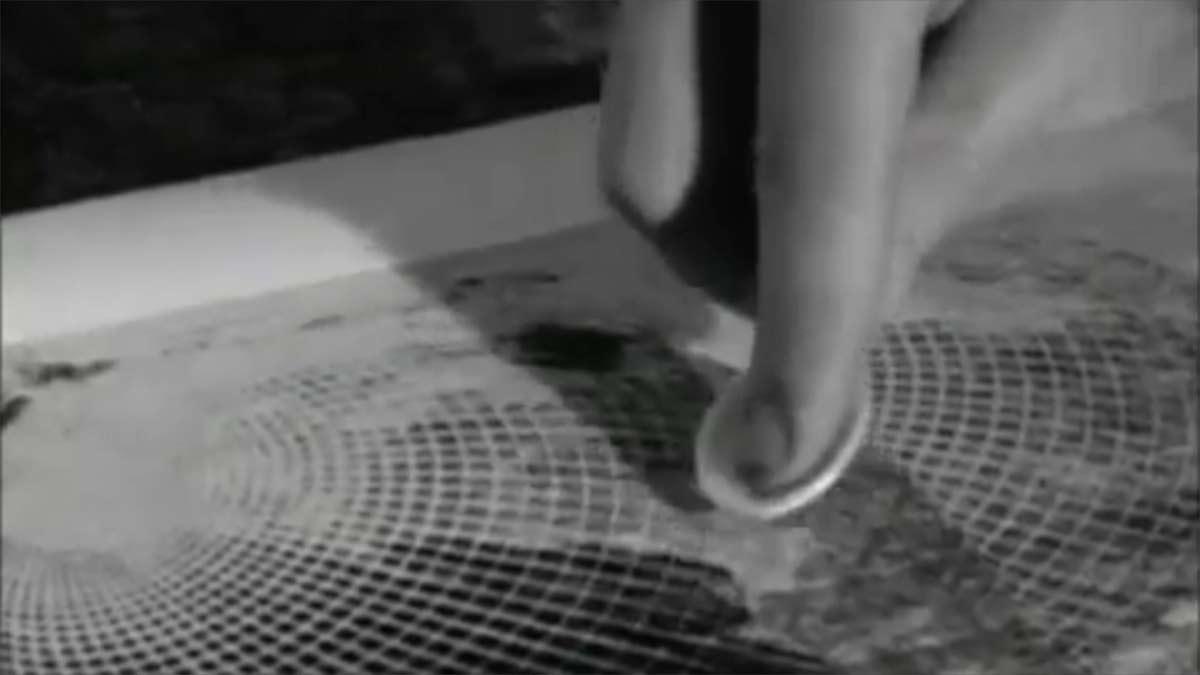
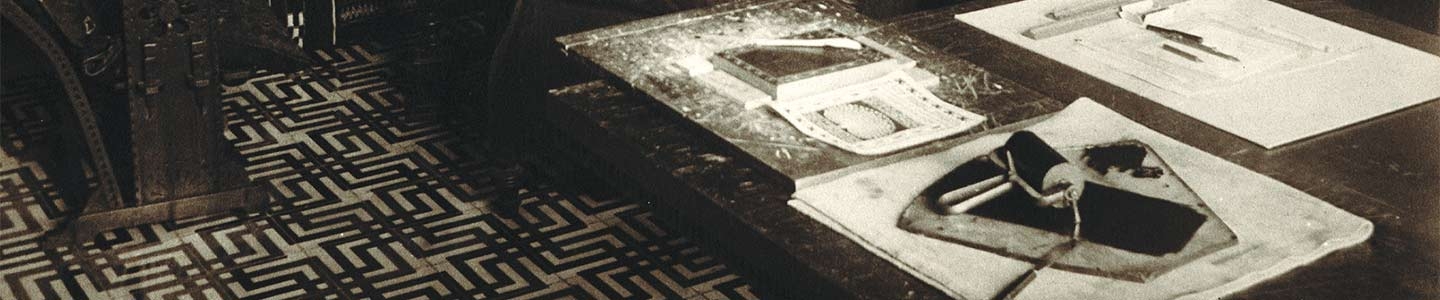
A woodcut is a print of an image that the artist has carved into a wooden plank, known as a block. Suppose Escher traces the outline of his left hand on the wood; his thumb would then be on the right-hand side. He carves out the outline, applies ink to the block, then places a sheet of paper over it and presses the ink into the paper. Once this is done, he removes the paper from the block and now the miracle takes place: the thumb is on the left-hand side. The print is therefore a mirror image of the design on the wooden block. He even has to carve the letters of his name in mirror image, so that we can read them properly in the artwork! Anyone viewing an Escher print in a museum will have even greater admiration for his craftsmanship. After all, we do have the feeling that every print was created ‘just like that’. When we fully realise that such complex works as Relativity (1953) and Metamorphosis I (1937) were also created in mirror image, it’s quite mind-boggling. What does this have to do with the little spoon pictured above? Escher used it to print his woodcuts. He printed every print by hand, and to transfer the ink from the woodblock onto the paper, you need a tool. Escher used small wooden egg spoons.

Escher working on his wood engraving Three Spheres I, filmstill.
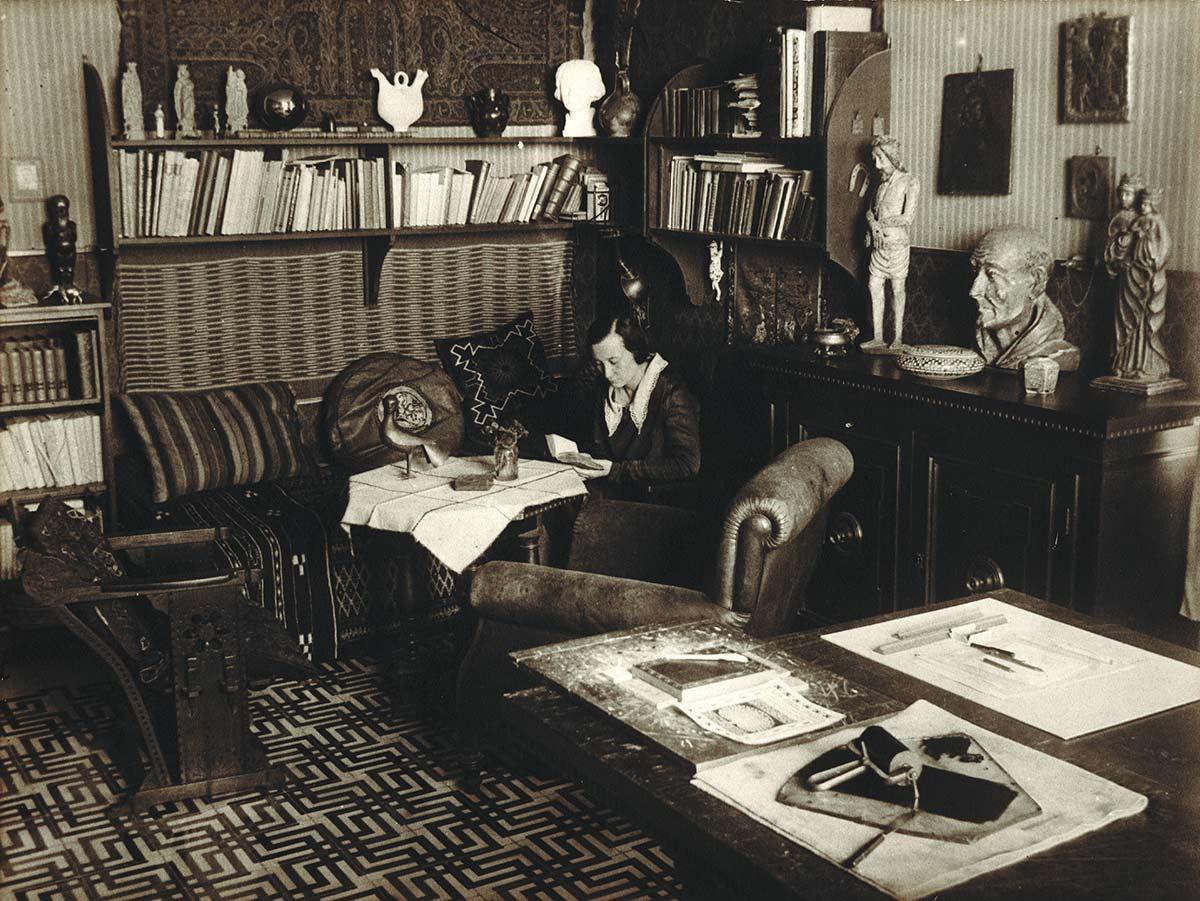
Jetta in the living room at Via Alessandro Poerio in Rome, spring 1931. Objects used for printing can be seen in front, amongst them the spoon.

This little egg spoon is on display in the museum. It was originally a special gift to a second cousin of M.C. Escher. Her mother was the daughter of Escher’s half-brother Beer (Berend). Years ago, she was occasionally allowed to visit Escher’s studio in Baarn. During one such visit, Escher gave her this spoon so that she could use it herself to make prints. If you look closely, you can see the printing ink on the flat underside of the spoon. Mrs Johanna Angelina Visser-van Bolhuis has kept this spoon ever since and donated it to the museum in 2014. Its provenance makes this little spoon very special. Not only did Escher use it to print engravings, but a family member also kept it for as long as 50 years before donating it to the museum. We are very grateful to her for that.

Incidentally, it is not the only surviving egg spoon belonging to Escher. The National Gallery of Canada in Ottawa holds another spoon, which was donated to the Canadian museum by George, the son of M.C. Escher.

Micky Piller

Micky Piller

Former curator at Escher in The Palace

Share:

More stories about Escher

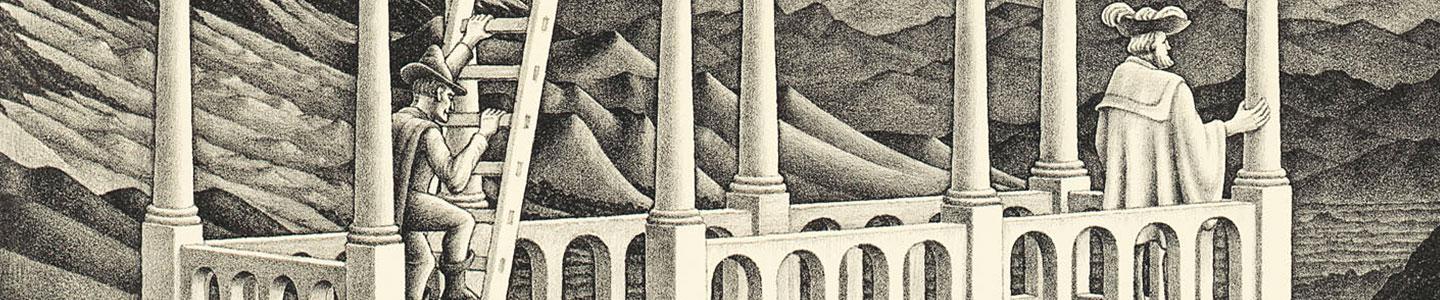
Dreaming of Belvedere

Dreaming of Belvedere

Have you ever found yourself trapped inside a dream, wandering aimlessly around a staircase, or unable to find your way out of a building? Followers of Freud and other experts in the human psyche might well be able to shed light on those dreams for you. But there is only one person who can actually show you what such a dream feels like: that one person is Maurits Cornelis Escher.

Sky and Water

Even though Escher produced more than 650 prints of Day and night, Sky and water I is undoubtedly his most famous work and the one that is most widely known to the general public. This square woodcut - depicting fish transforming into birds - can be seen on posters, mug, bedspreads and sometimes even in advertising campaigns.
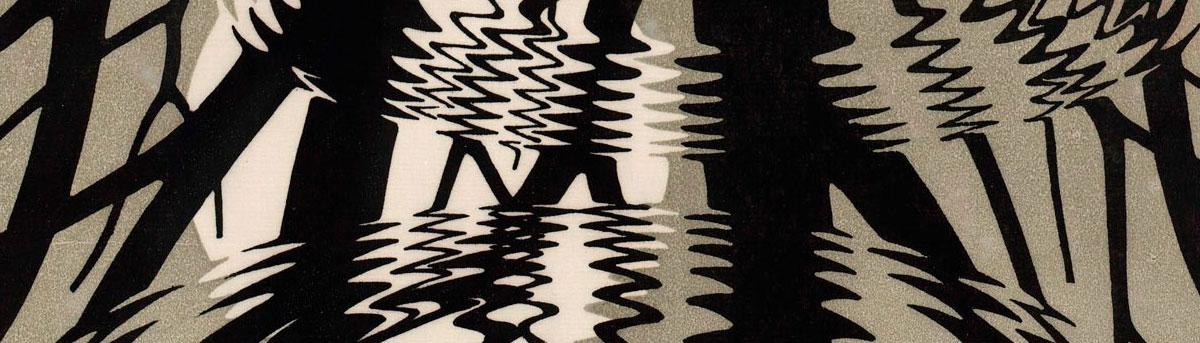
Reflections in Rippled surface

Reflections in Rippled surface

Reflection is a recurring theme in the work of Maurits Escher. This in itself is not that surprising. Most artists produce a self-portrait at some point. Escher carved his first self-portrait while he was still living in Arnhem and he continued to create successive self-portraits at regular intervals during his career. Escher used ordinary mirrors, but Escher also used other reflective surfaces.