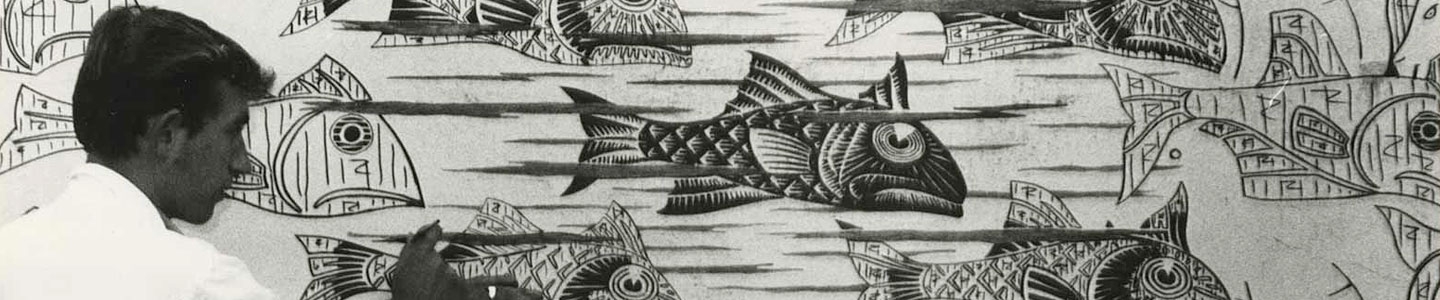
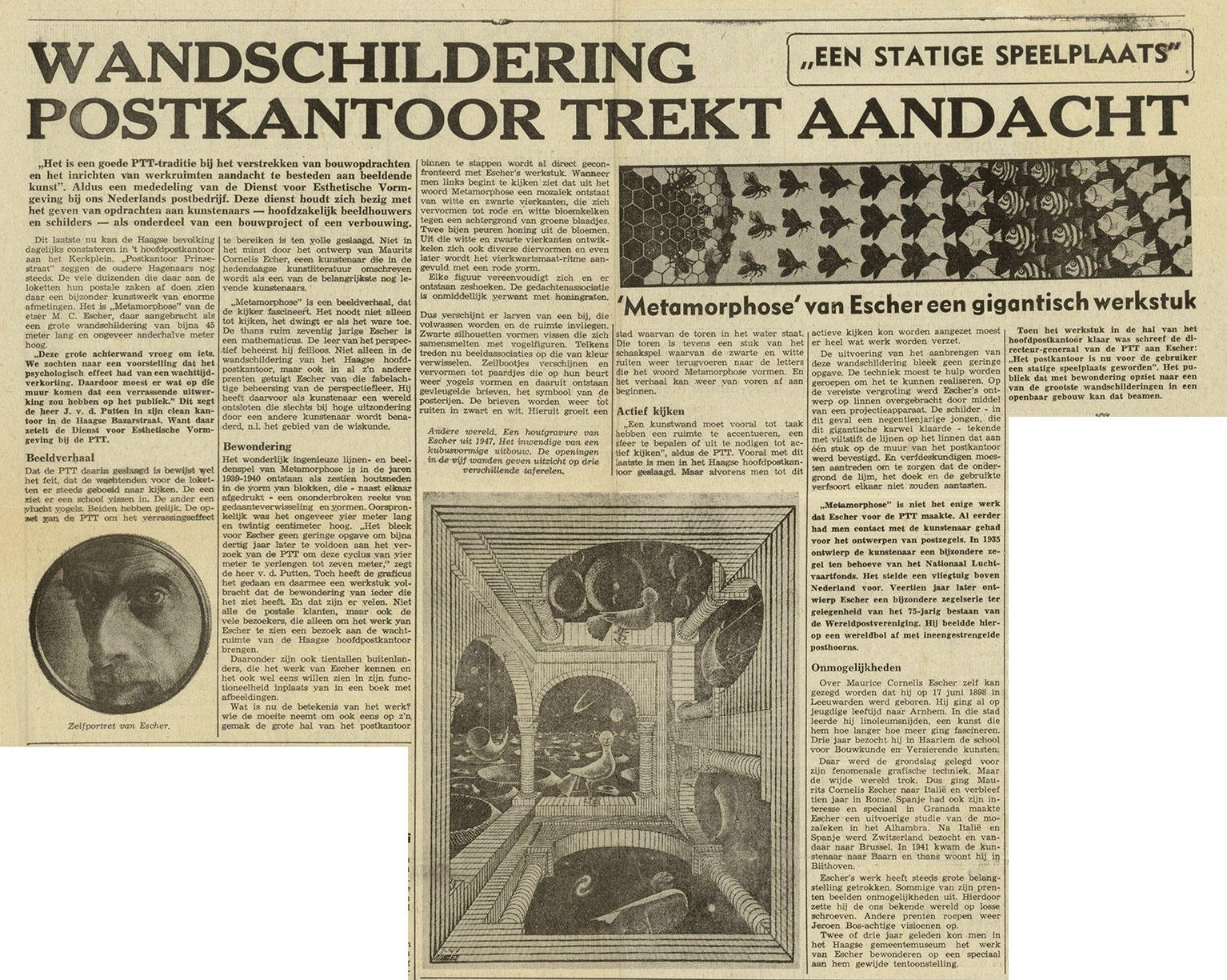
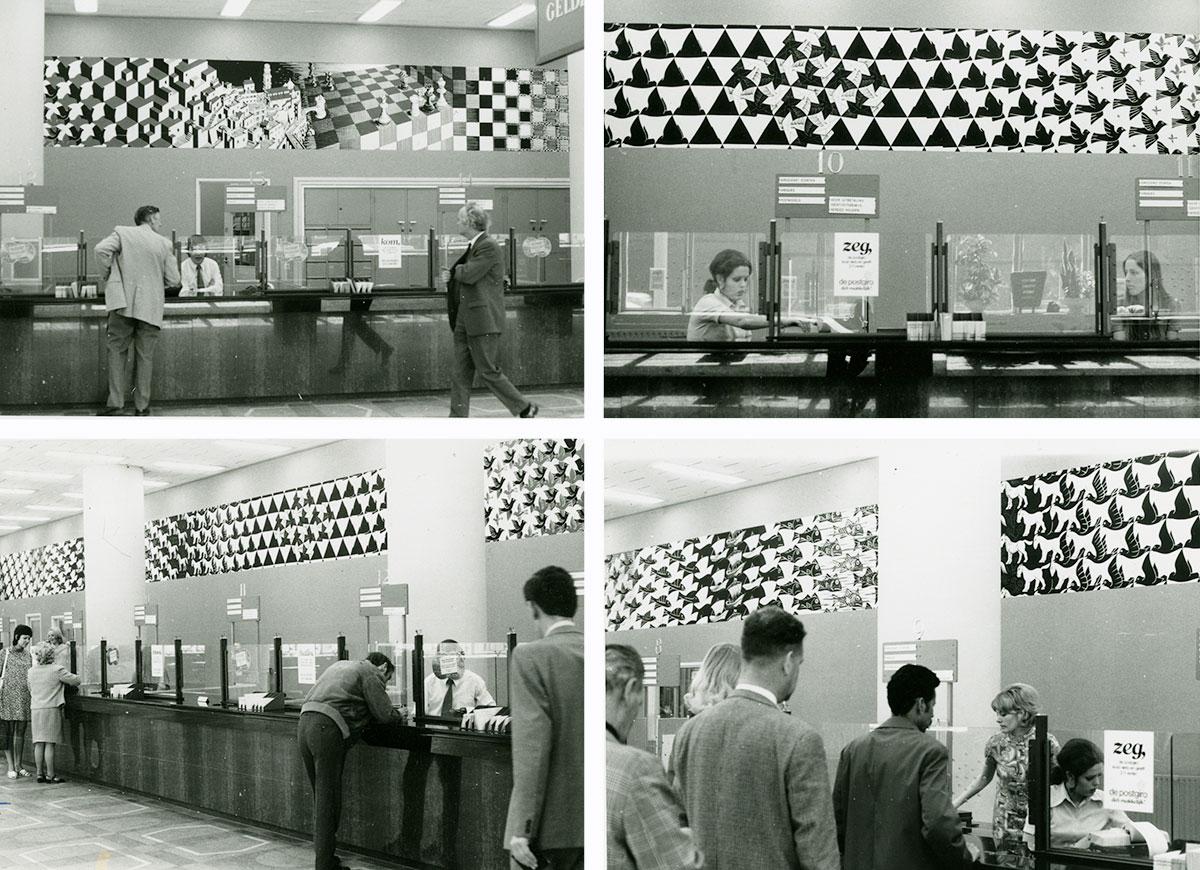
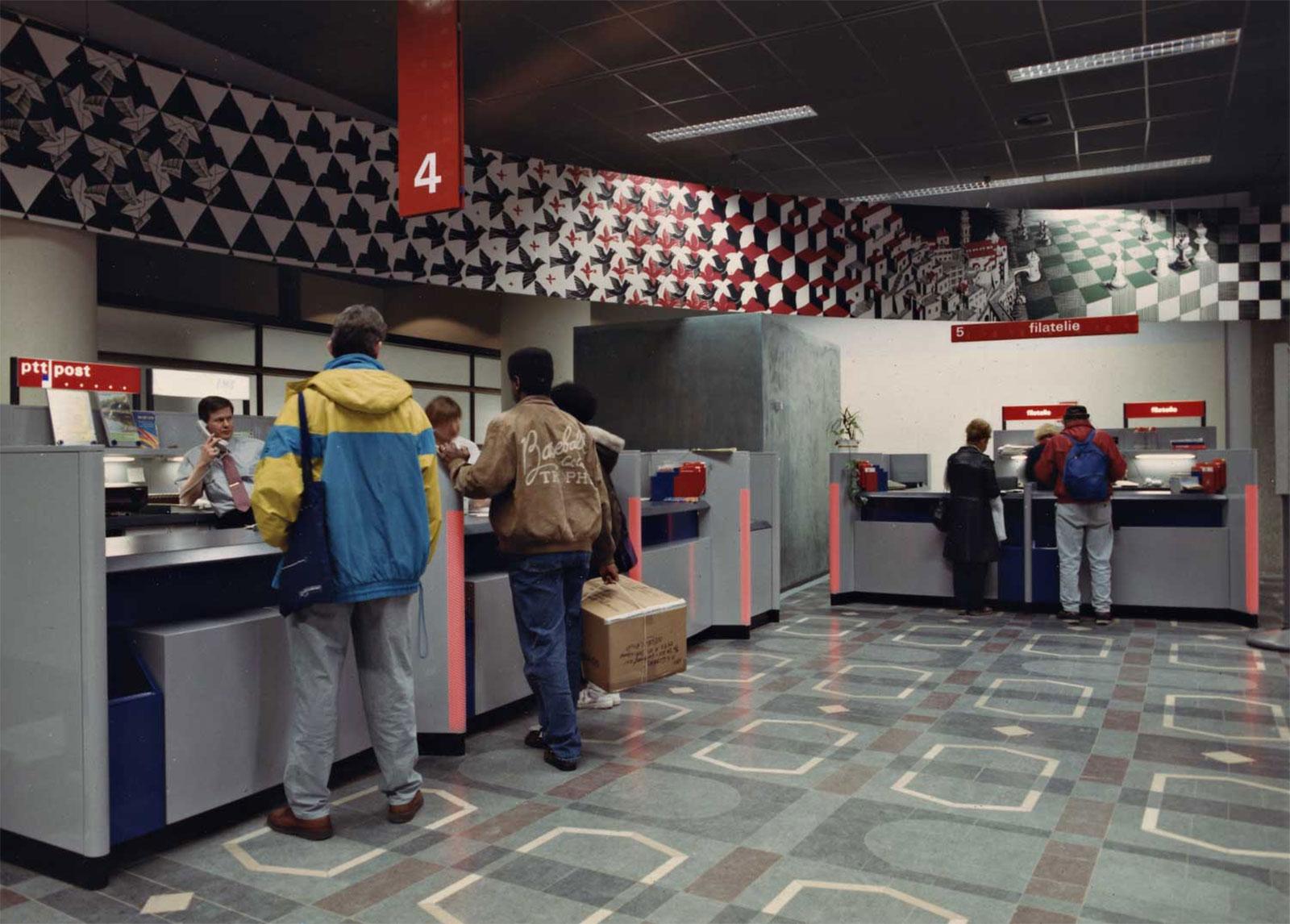
In 1967 and 1968, Escher spent roughly six months designing and executing the additional segments that would ultimately become Metamorphosis III (1967–1968). The project thus evolved from the first version of the print he made in 1937 into a greatly enlarged work that, more than thirty years later, would occupy an entire wall in a monumental hall.
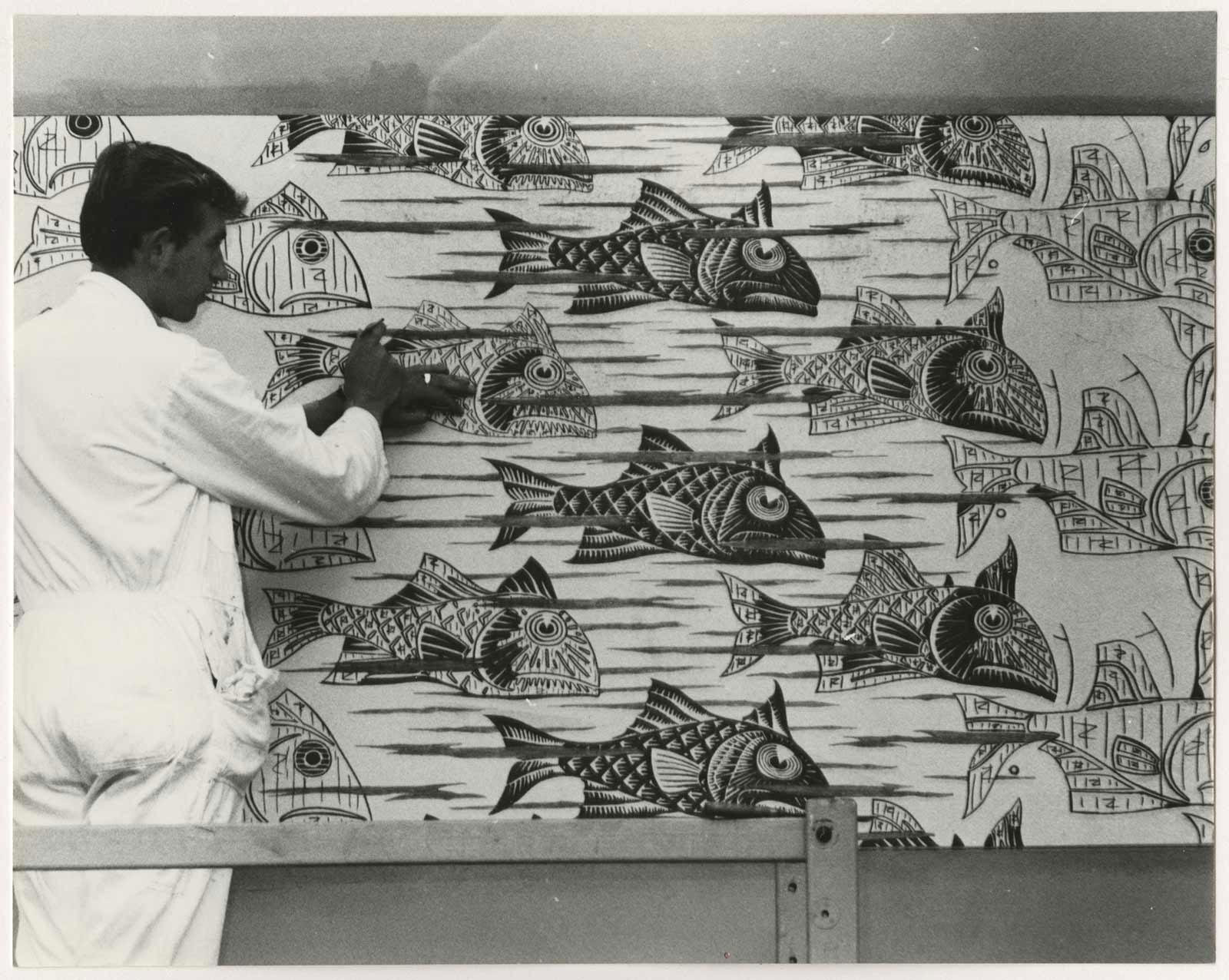
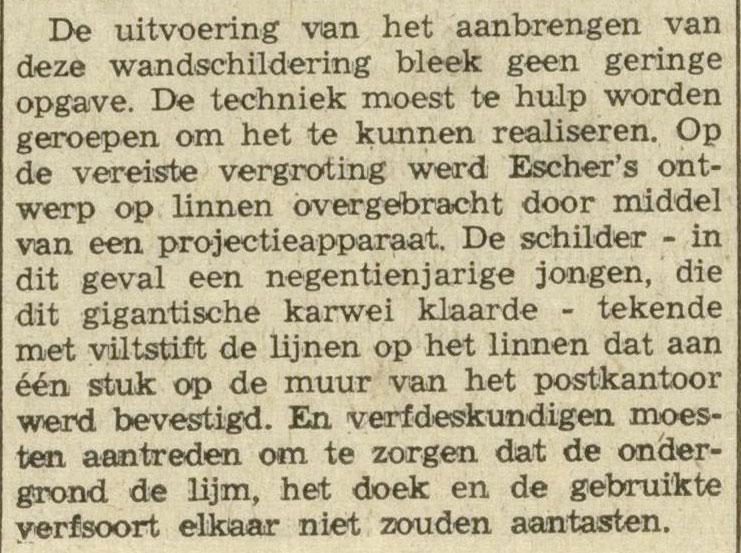
For the realisation of the large-scale mural, the young painting apprentice from Katwijk, Huug Vooys, was selected. Eisema’s Schildersblad devoted considerable attention to this commission, given the great responsibility entrusted to the apprentice: "the opportunity of a lifetime."** Initially, the painting firm involved was hesitant to accept the assignment due to its exceptional nature and scale. However, Escher placed great importance on a precise and neutral execution of his design and wanted to prevent an autonomous artist from adding a personal interpretation. The commission did not require artistic reinterpretation, but rather a technically exact translation of an existing visual concept into monumental form. Once it became clear that the role was strictly executory, the assignment was accepted.
Escher stipulated that the work be carried out by a single painter to ensure consistency in style and finish. This gave Vooys the chance, while still in training, to realise a work of exceptional size and visibility. Vooys was employed by the painting firm Hoval from Valkenburg and had already distinguished himself there, fitting the required profile well.