This website uses cookies

We use cookies and similar technologies on this website to analyze visits and to show you relevant messages on social media. By clicking 'Accept all' you give permission for their placement and for the processing of personal data obtained in this way, as stated in our privacy & cookie statement.

Our privacy & cookie statement:

Donation of Verkade's Koh-I-Noor tin
26 March 2024

Donation of Verkade's Koh-I-Noor tin

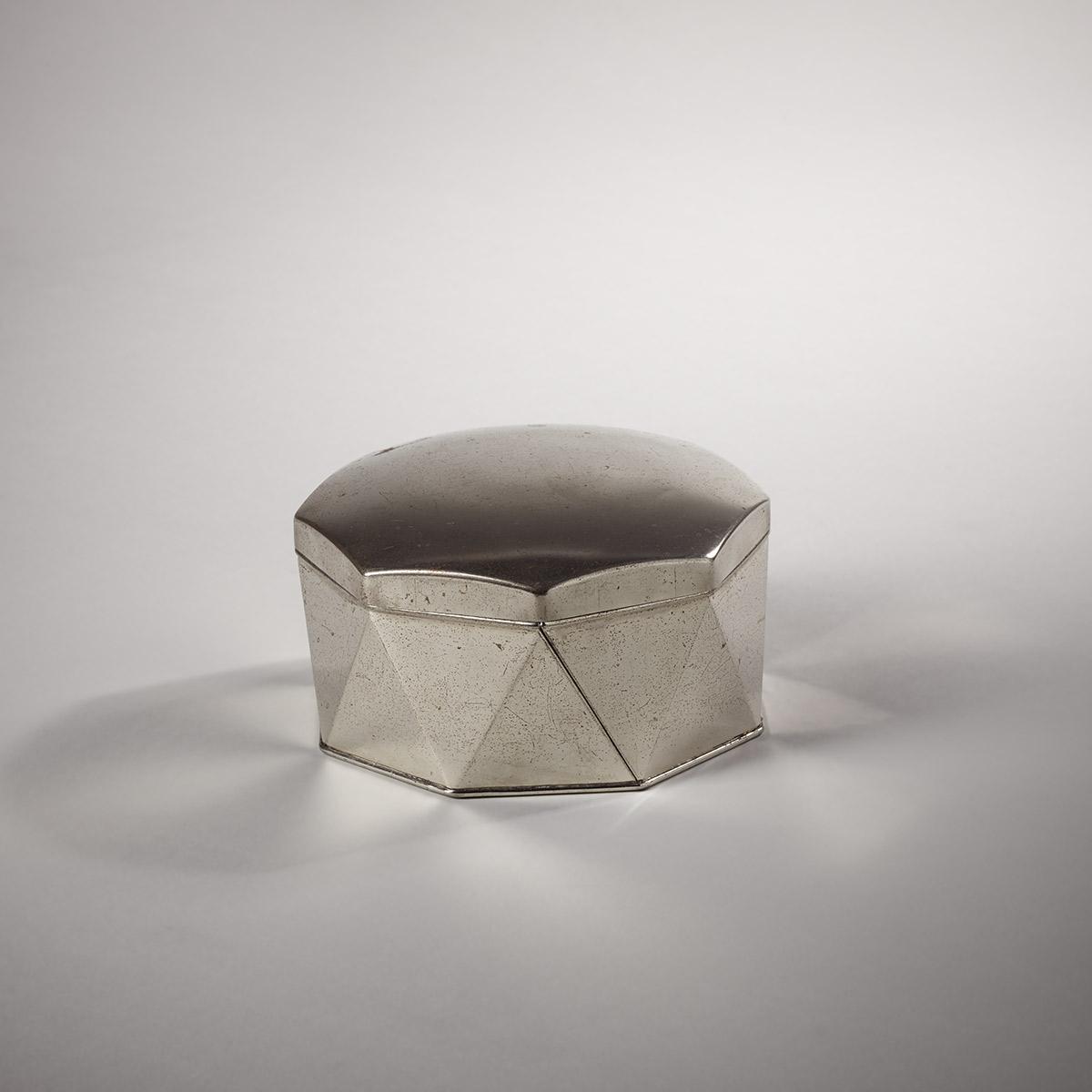
Last summer, Escher in The Palace received a special donation from Escher expert and mathematician Doris Schattschneider. She donated a Koh-I-Noor tin by Verkade, inspired by the Koh-I-Noor, one of the world's most famous diamonds. This Verkade tin was an important inspiration for a tin that Escher designed in 1963.

Koh-I-Noor tin by Verkade, 1953, tin. Donated from private collection of Doris Schattschneider
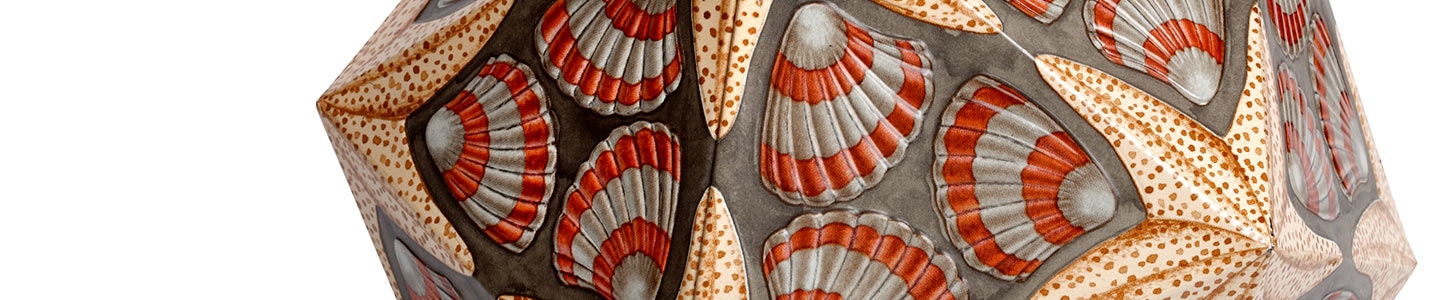
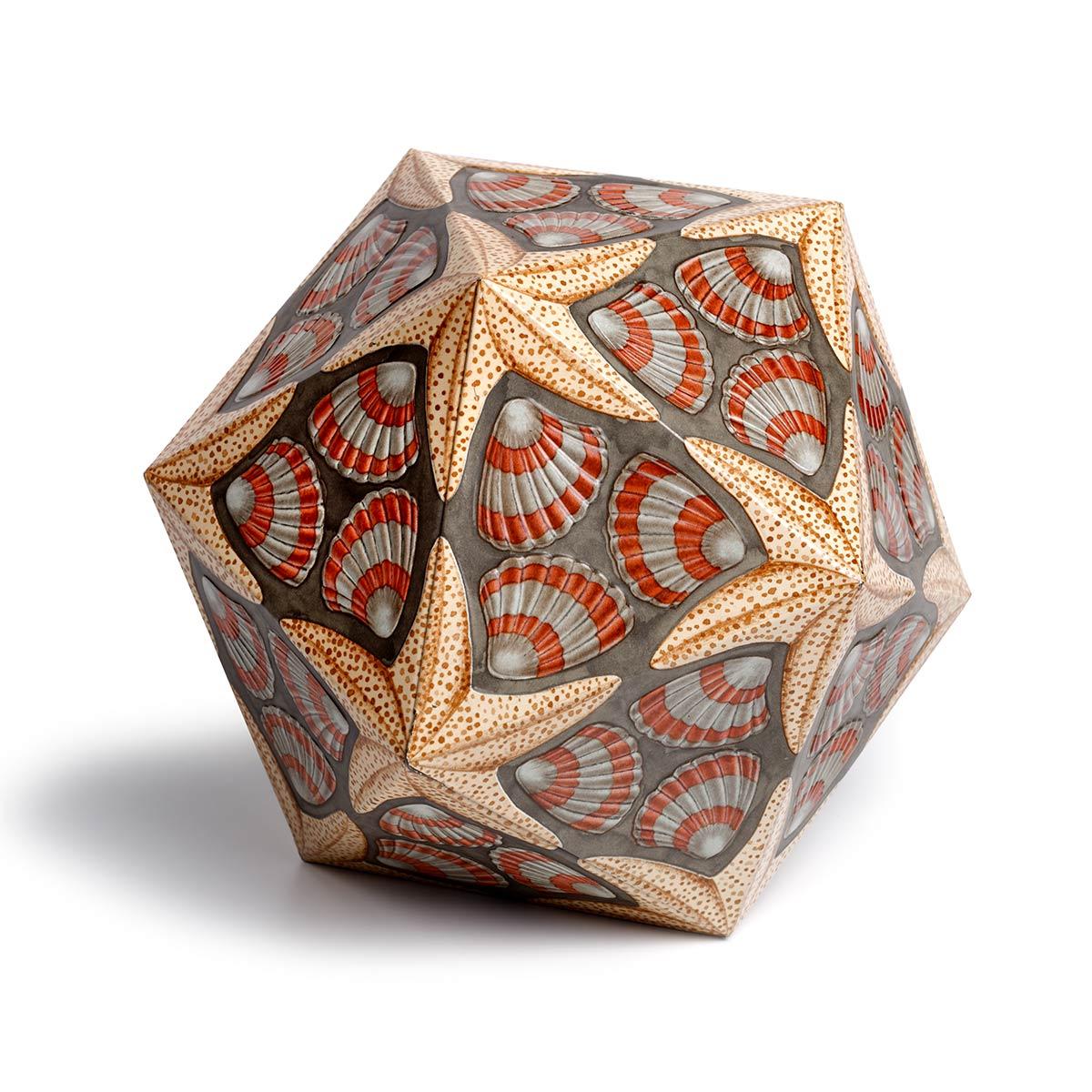
M.C. Escher, Icosahedron, convex polyhedron with sea stars and shells, 1963, tin

Escher was asked in 1963 to develop a tin drum to mark the 75th anniversary of tin manufacturer Verblifa (De Vereenigde Blikfabrieken). Escher initially hesitated to accept the commission. After all, he did not have to do it for the money. But his doubts gave way to enthusiasm when he saw a Koh-I-Noor tin by Verkade. When he saw the tin, Escher said, “Look, the design of this drum fascinates me. For it is part of a regular icosahedron ”. He would accept the commission only if the design could be an icosahedron (twenty-faced polyhedron), inspired by the Koh-I-Noor tin. And so it came to pass.

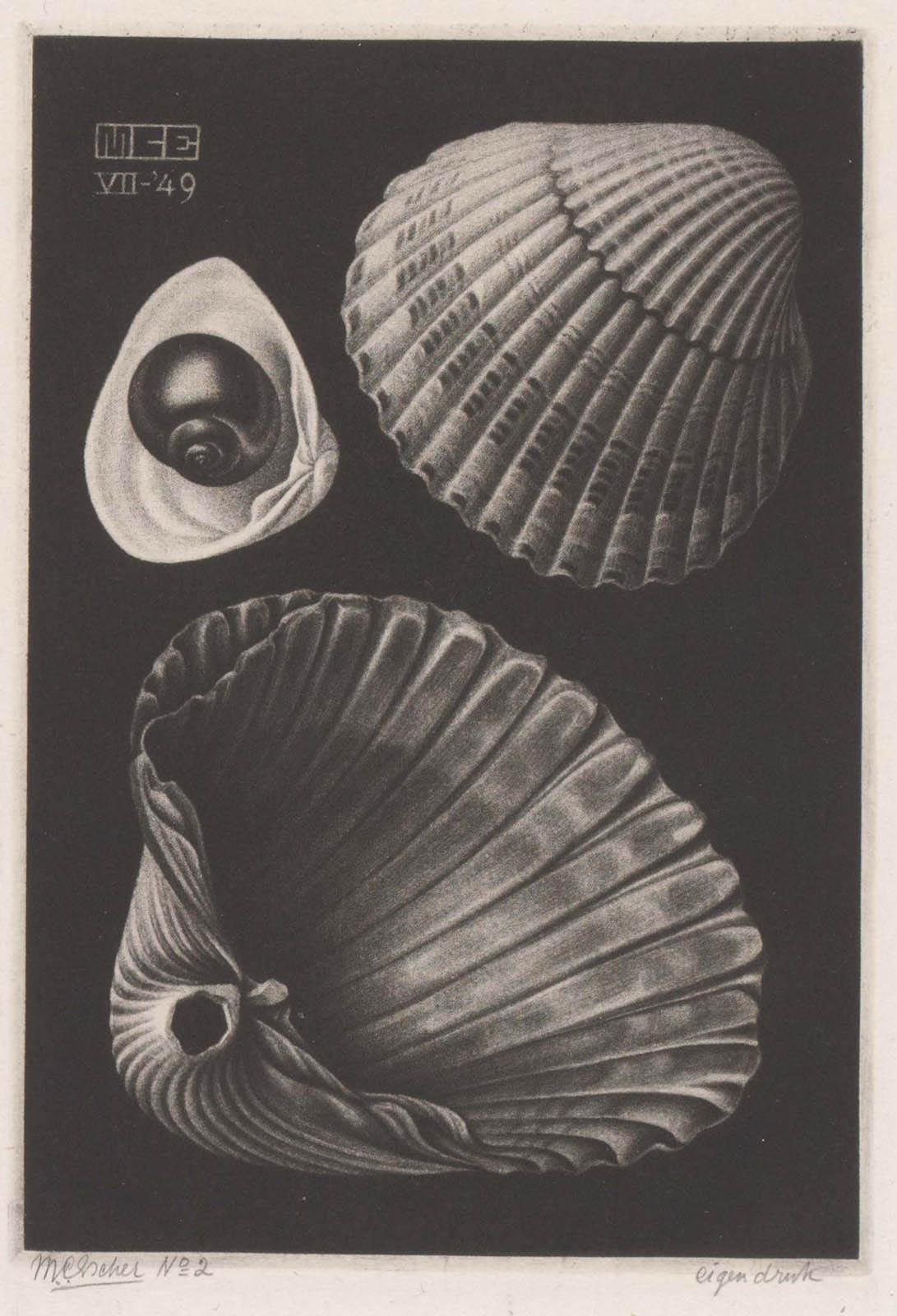
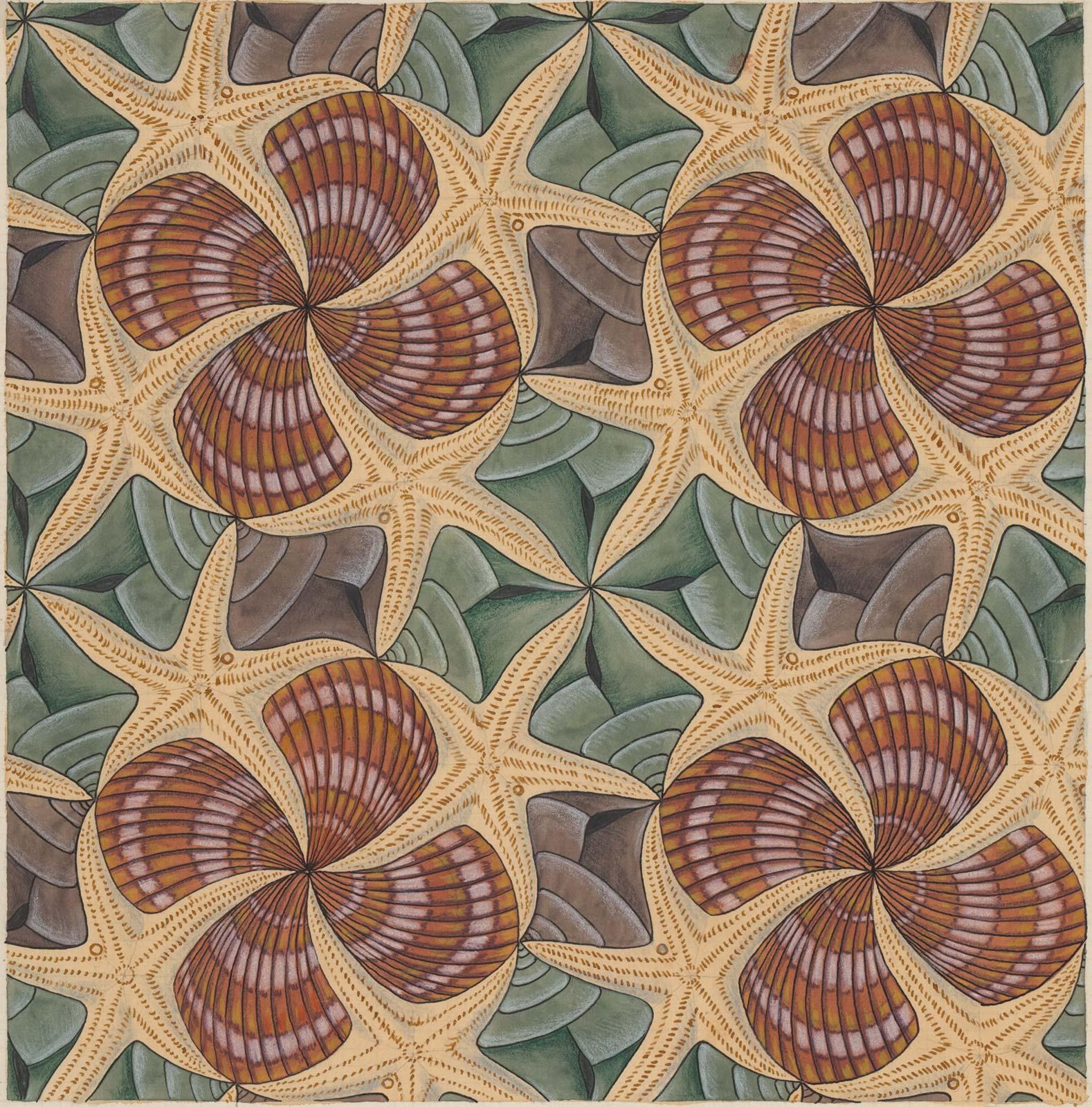
After various preliminary studies, Escher designed an icosahedron covered with a tessellating motif of starfish and shells. The pattern is reminiscent of Escher's mezzotint Sea Shells (1949) and repeats to display the beautiful symmetry of the polyhedron. The tin was filled with chocolates and was a gift for business associates. In total, Verblifa manufactured 7000 of them. It was a costly project, as production costs were very high, at 8 guilders per tin. The most expensive tin at the time cost at most 1.75 guilders. Due to the large size, extra chocolates were needed to fill it, which contributed to the increased price.

M.C. Escher, Sea Shells, mezzotint, July 1949
M.C. Escher, Regular division drawing with shells and starfish, no. 42, India ink, coloured ink, pencil and watercolour on paper, August 1941

The linked triangular faces of Escher's Verblifa tin resemble the Verkade Koh-I-Noor tin, which is shaped like an octagonal antiprism. Verkade has been making rusks, biscuits and chocolate since the late 19th century. The tin was first issued in 1931 and contained typical Verkade biscuits. In advertisements, the tin was referred to as a gem because of its striking shape, which reflected sparkling light from different angles.

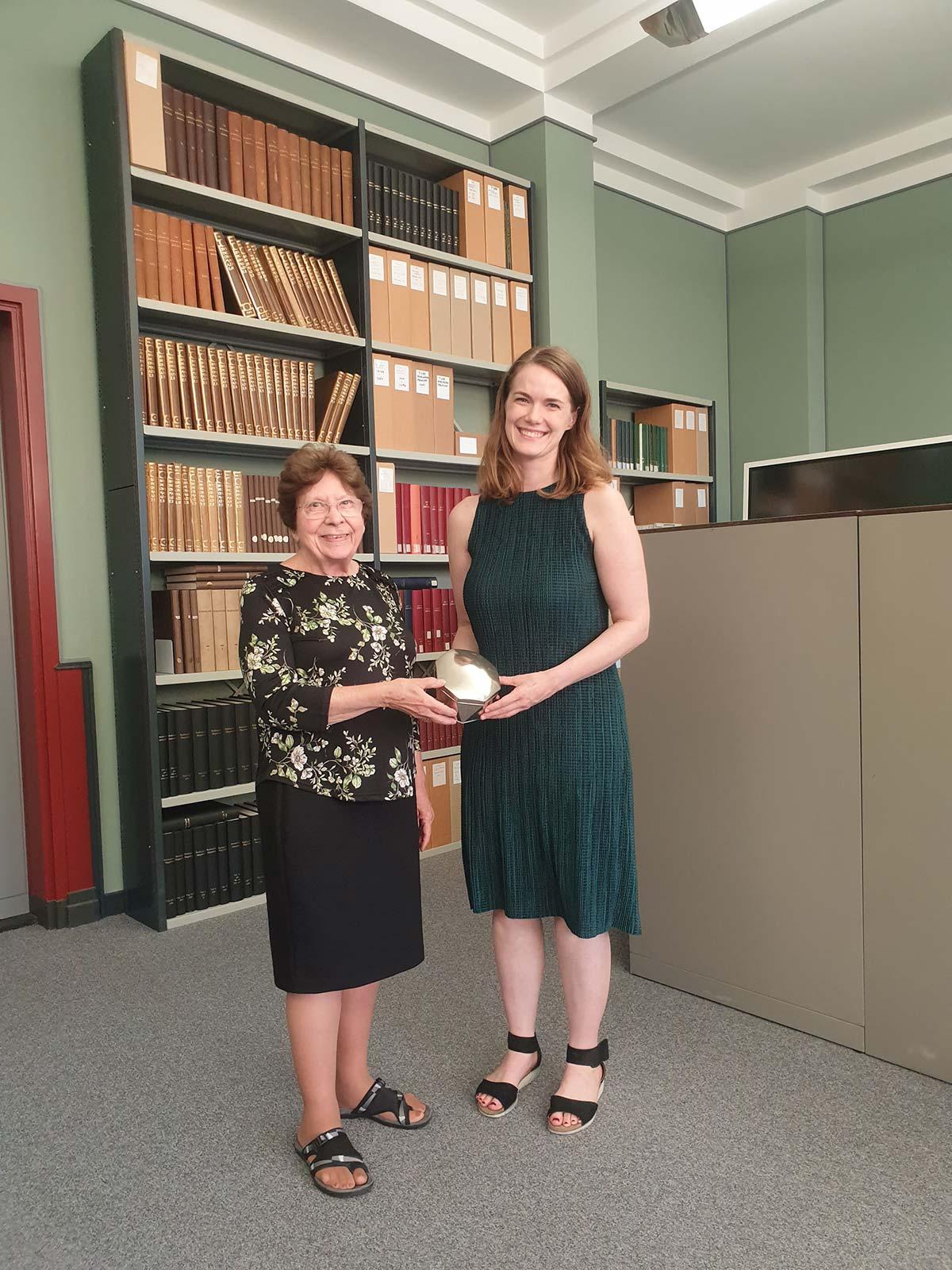
Doris Schattschneider and curator Judith Kadee on receiving the tin at Kunstmuseum Den Haag

Escher in The Palace is very grateful to Doris Schattschneider – the American mathematician who has been studying the work of M.C. Escher for several decades – for her donation, which deepens our understanding of Escher’s sources of inspiration. The tin is on display beside the icosahedron at Escher in The Palace since 27 March.

Judith Kadee

Judith Kadee

Former curator at Escher in The Palace

Share:

More Escher Today

Escher in 2023

3 January 2024

Escher in 2023

Every year is special at Escher in The Palace, but 2023 was truly one for the books. This year marked 125 years since M.C. Escher was born and that fact was celebrated far and wide. These days, we especially look back on all the wonderful exhibitions and events we had the pleasure of organising. The Escher jubilee year was celebrated with wonderful exhibitions at our museum and also at Kunstmuseum Den Haag. Fortunately, the final exhibition Just Like Escher can still be seen until the 24th of March 2024. The anniversary year was also celebrated with numerous activities in The Hague. In addition, we continued to post as many stories about Escher's life and art as possible. All the wonderful images we shared this year can be found in this special end-of-year animation. We thank everyone for their support over the past year and hope to inspire you again in 2024 with our stories and images!
Looking at old masters

9 September 2023

Looking at old masters

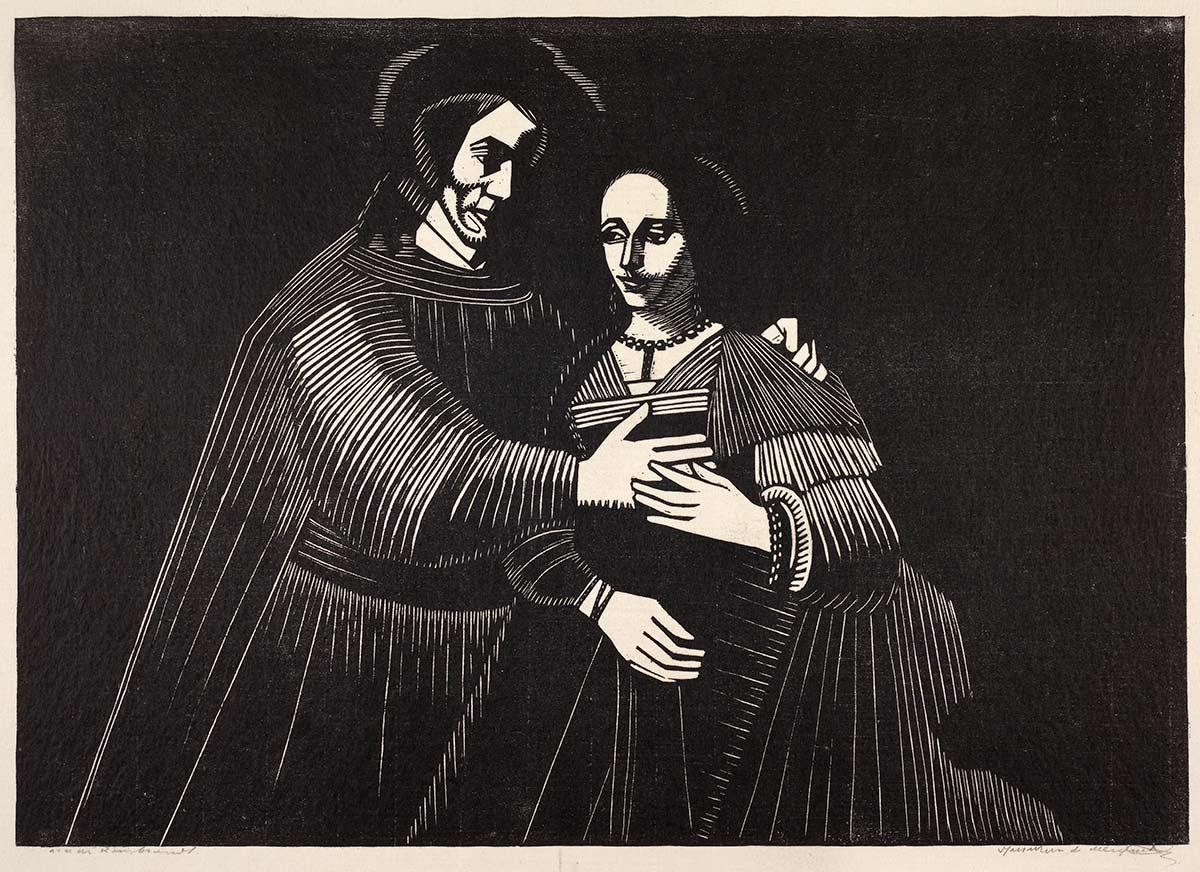
Inspiration can be taken not only from a direct mentor (who is essential for each and every art student) but also from masters from past eras. Escher, for instance, learned not only from his teacher Samuel Jessurun de Mesquita but also from looking to the past. In turn, De Mesquita drew on work by an old master too. Looking to precedents produced by artists from before one’s time is extremely common. Working in the style of or imitating well-known pictures is one way for artists to draw on the techniques and ideas of their heroes and to challenge themselves by looking at art from another person’s perspective
Magical polyhedra

22 July 2023

Magical polyhedra

Flat surfaces were tremendously important to M.C. Escher. A two-dimensional blank sheet of paper gave him the opportunity to explore the infinite and to conjure illusions. On such sheets he would create deceptive three-dimensional worlds in which order and chaos are in conflict, just like in the real world. But despite order frequently losing out to chaos in the real world, Escher turned this on its head.