
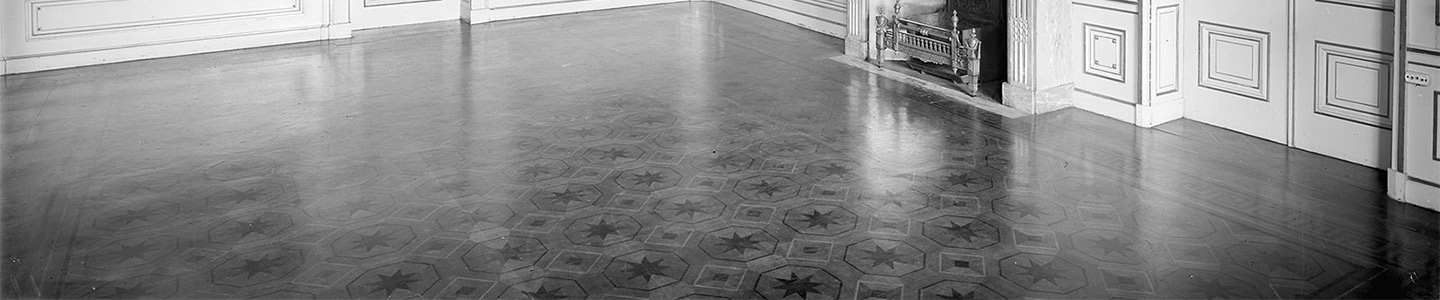
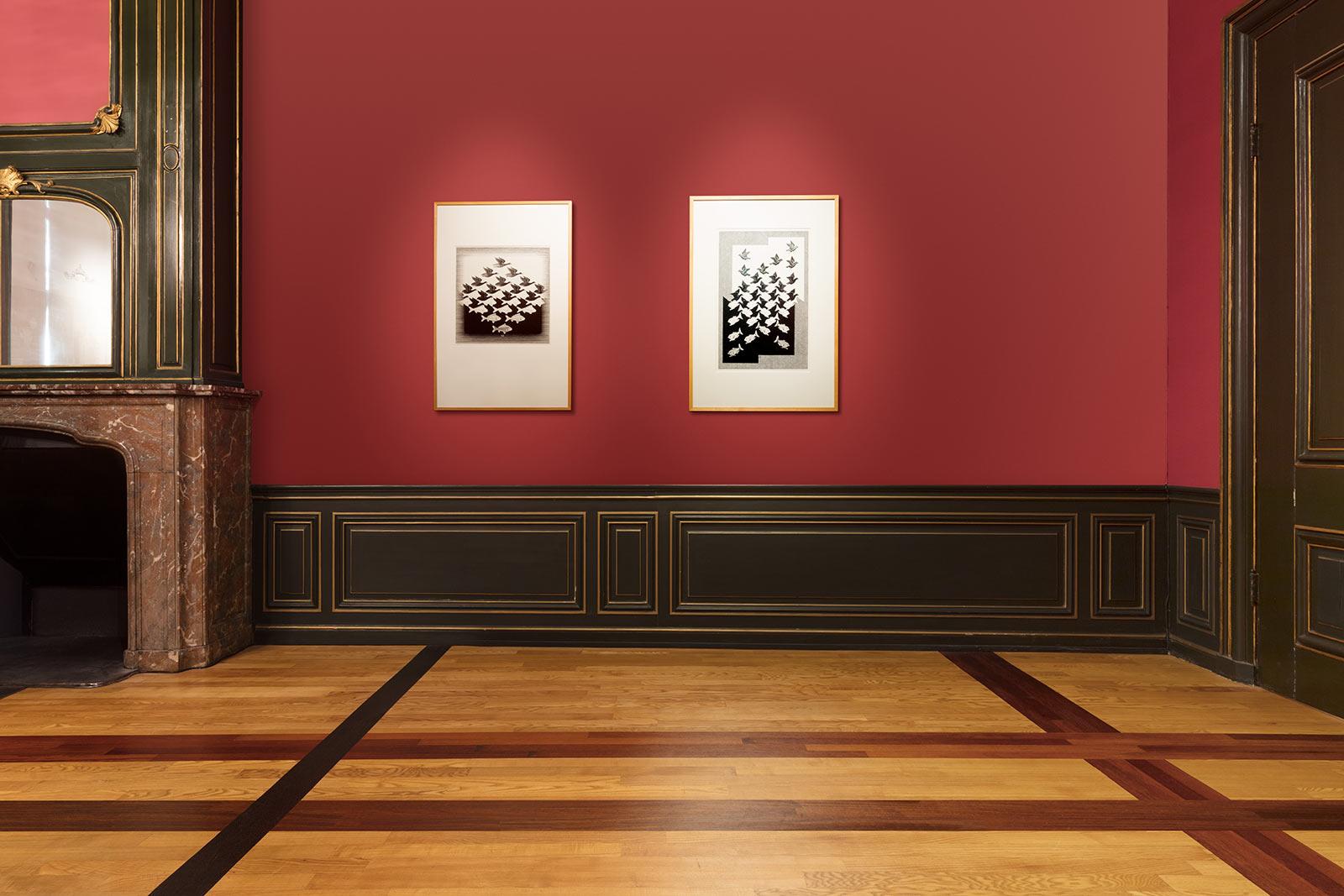
A special parquet floor has always been in the Ballroom of Lange Voorhout Palace. However, it was not always the one that is currently laid there, designed by American minimalist artist Donald Judd (1928-1994). The Ballroom is the heart of the building; a role it already fulfilled when Queen Emma, the Queen Mother lived in the palace between 1901 and 1934. This largest room in the palace was regularly used for balls and dinners with many guests. At the time, it had a parquet floor with a pattern of stars surrounded by octagons, dating from 1882.* The floor complemented the Baroque Louis XVI style of the panelling and the ornamental decorations on the ceiling. However, in August 1992, the parquet had to be replaced. None other than artist and designer Donald Judd was asked to design a new floor, especially for the museum.
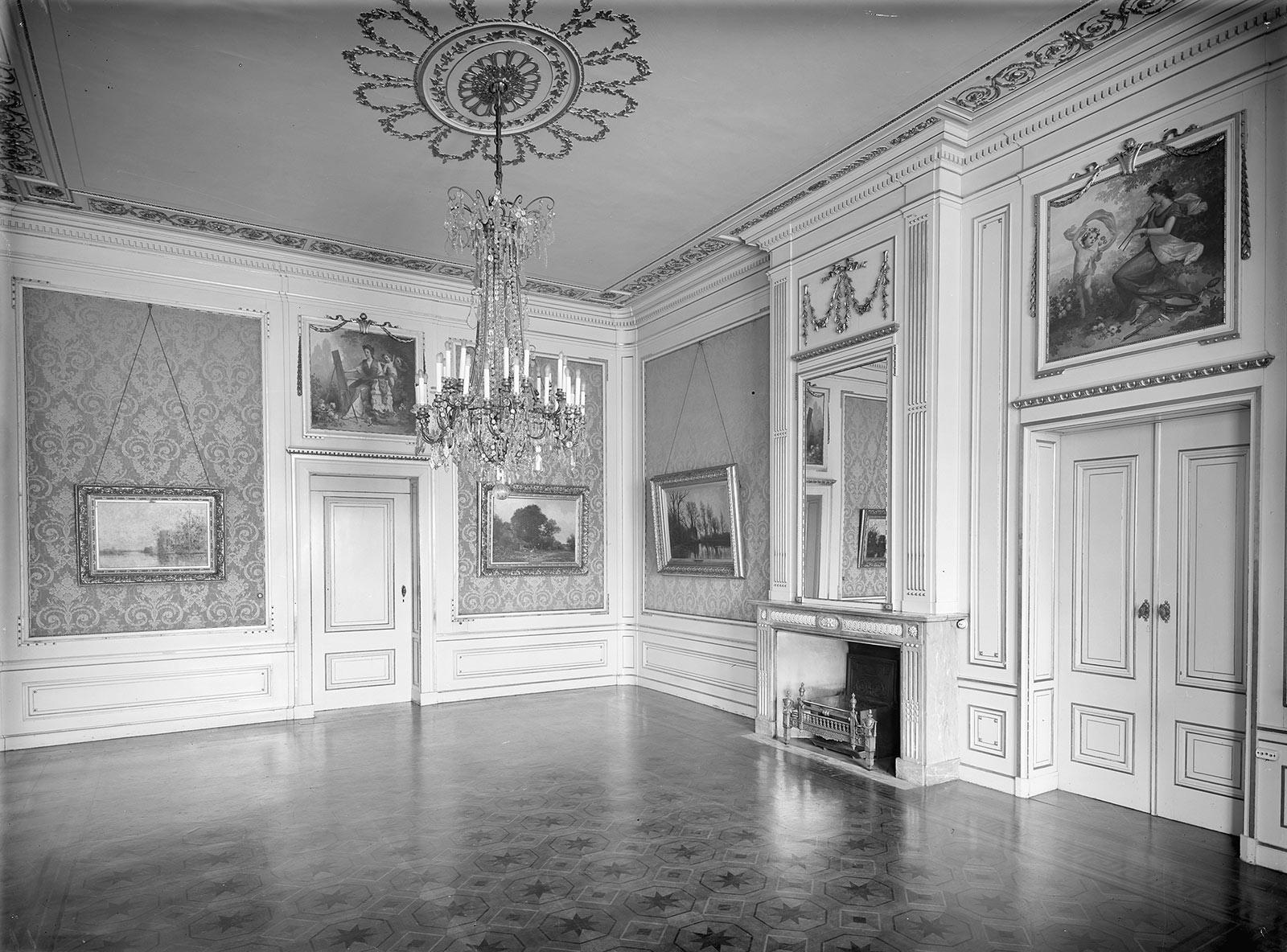
Ballroom at Lange Voorhout Palace, 1942. Photographer: unknown. Collection Cultural Heritage Agency
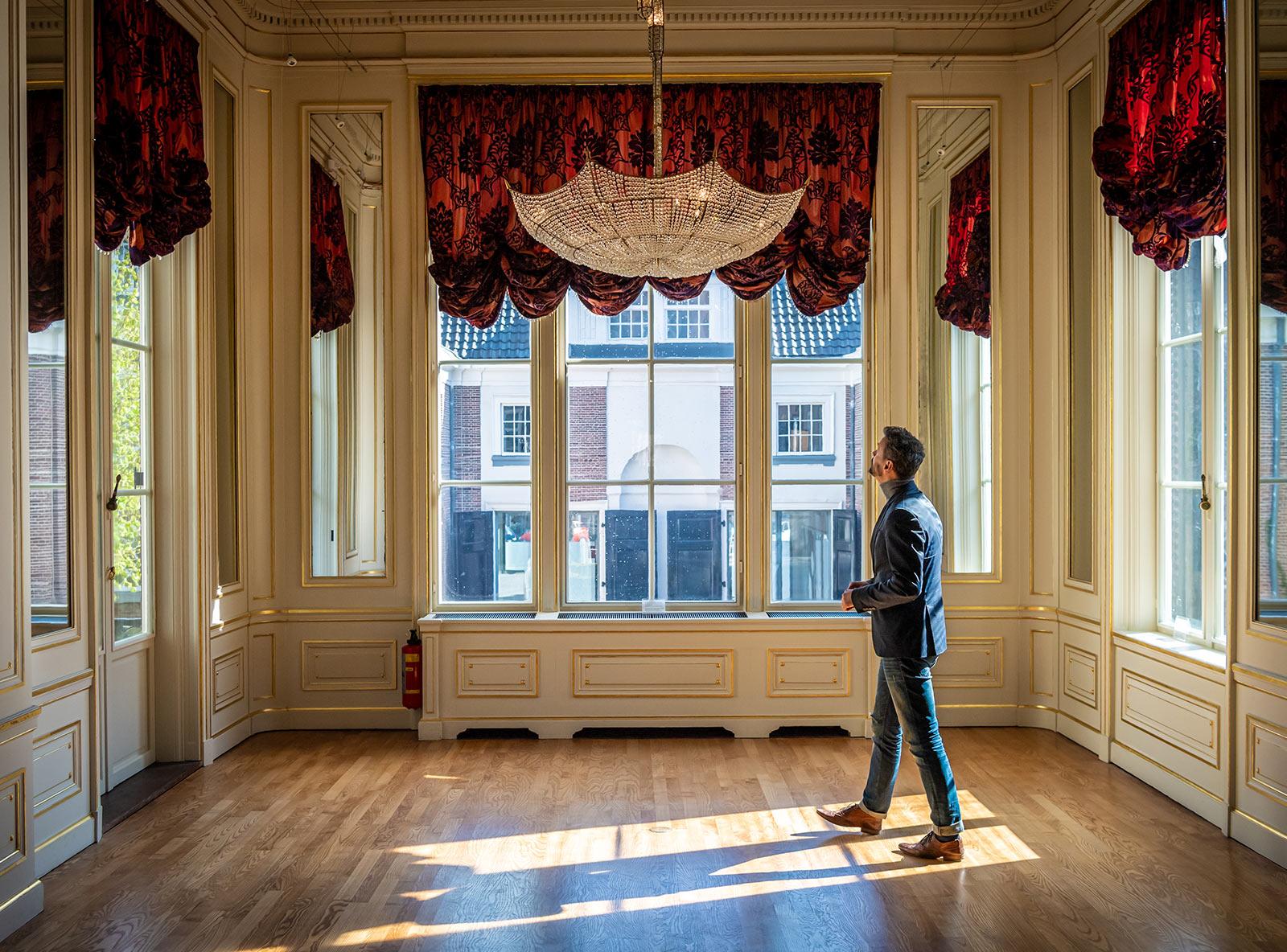
Ballroom at Escher in The Palace
Judd is one of the best-known representatives of minimal art, an American art movement that emerged around 1965. A testament to his fame is Judd's presence in the collections of several major national and international museums, such as the Museum of Modern Art in New York, Tate Modern in London and the Stedelijk Museum Amsterdam. The art of minimal artists is based on industrial materials such as raw iron plates, wood or plywood. With simple, often abstract forms, minimal artists establish a connection with their surroundings. For Judd, the choice and quality of the material was therefore very important. Five types of wood were used in the design for the floor of the Lange Voorhout Palace: ash, basralocus, kambala, wenge and merbau. A special feature is that the design on the ground floor and first floor was not conceived per room, but per floor. This makes the wood grain appear to continue into the next room. To prevent colour differences within the stripes, each plank was selected by hand. The floor is therefore a true work of art in itself.
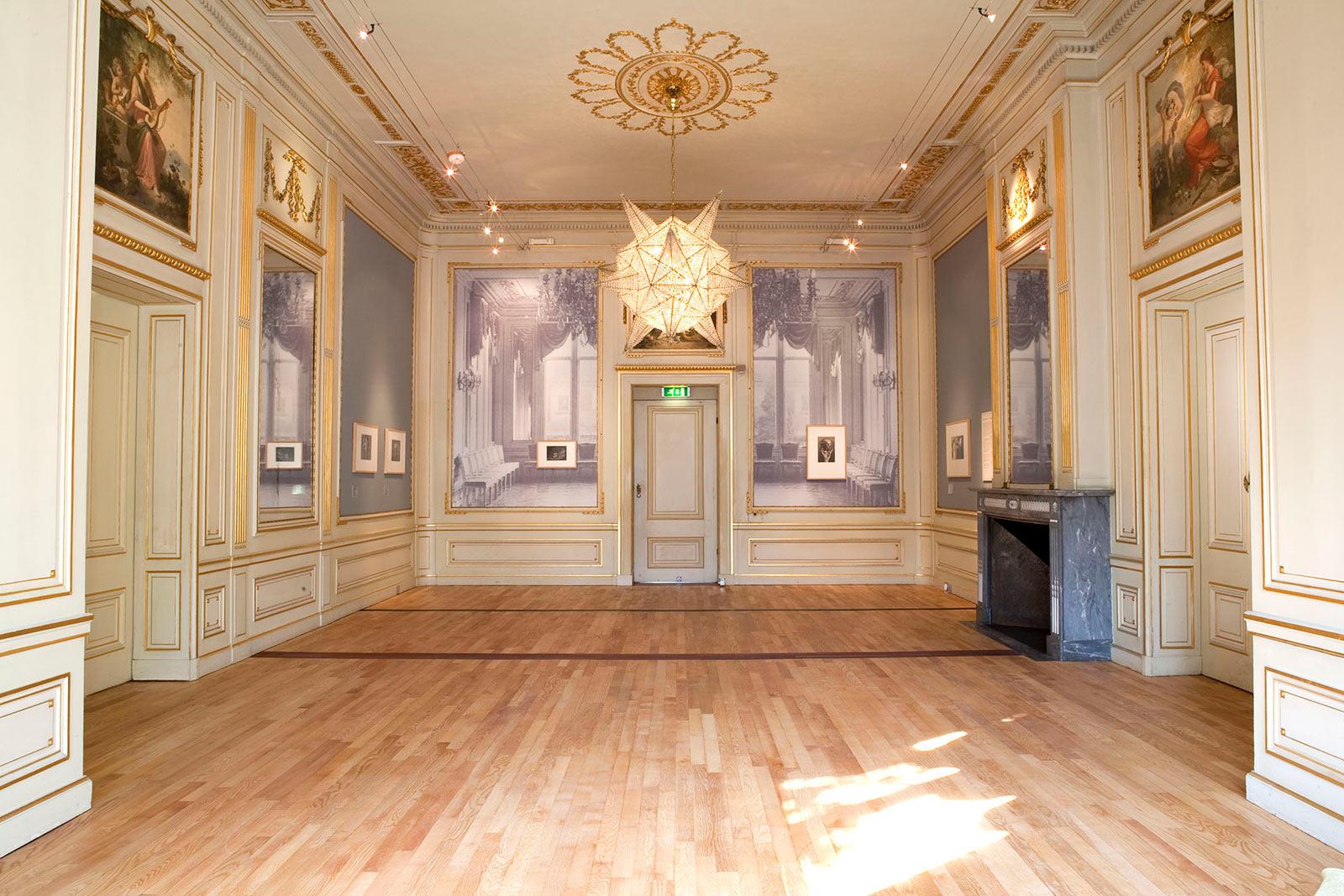
Isabel Nabuurs
Gerrit Schreurs
Judd's parquet floor was installed in 1992 on behalf of Rudi Fuchs. From 1987 to 1993, he was director of the former Gemeentemuseum in The Hague (now: Kunstmuseum Den Haag). Fuchs maintained strong connections with minimal artists, including Donald Judd and Sol LeWitt. The latter designed several murals for the Gemeentemuseum in The Hague itself. In the 1990s, Lange Voorhout Palace served as an annex of the Gemeentemuseum under the name Museum Het Paleis. For years, work by modern and contemporary artists such as Pablo Picasso, Frida Kahlo, Auguste Rodin and Anselm Kiefer was exhibited here. According to Fuchs, a new modern, geometric parquet floor was therefore more suited to the art on display.
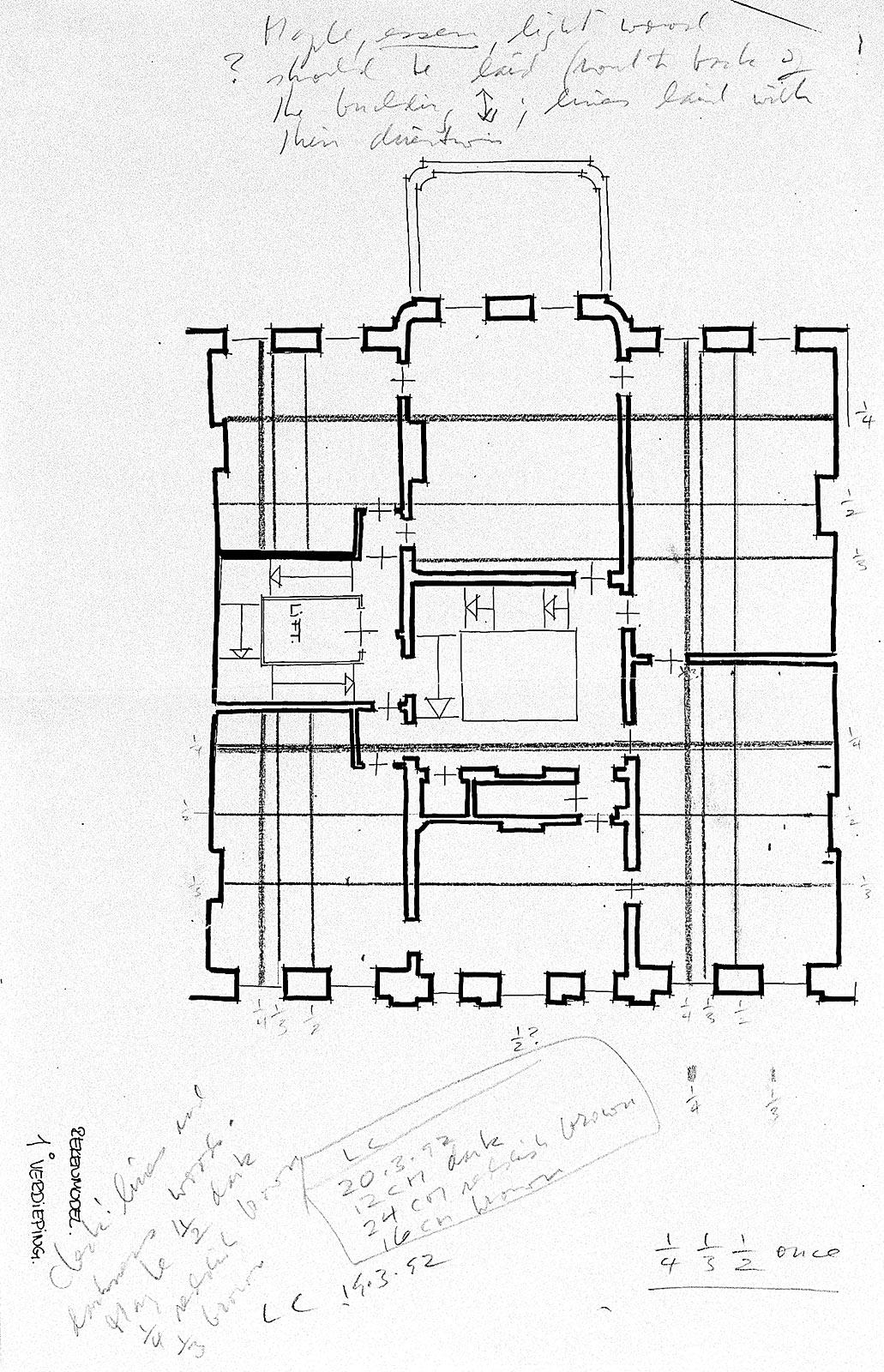
Donald Judd, Design of the parquet floor for the first floor, 1992
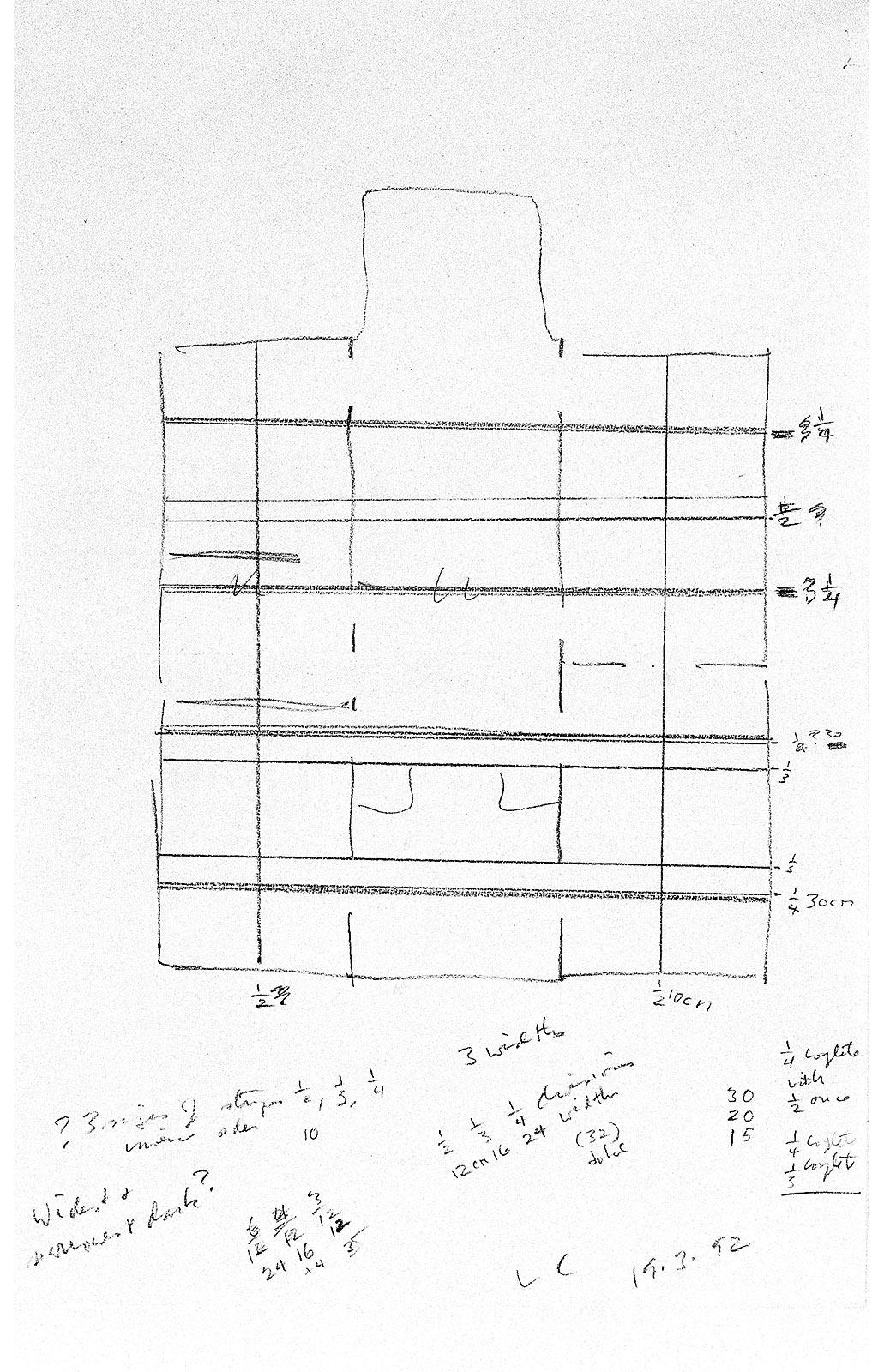
Donald Judd, Design of the parquet floor for the ground floor, 1992
The original floor, which had to make way for Judd's design, was temporarily stored at the Gemeentemuseum in consultation with the Dutch Monument Conservation Department. It remained there for a few years, awaiting a new destination. Thanks to the mediation of Simon Kamper, director of Stichting Behoud Waardevol Erfgoed (the Foundation for the Preservation of Valuable Heritage), the floor was eventually given a new home in the Royal Theatre (now: The National Theatre). Originally, the theatre was also a city palace, built in 1766 for Karel Christiaan van Nassau-Weilburg and his wife Carolina van Oranje-Nassau. A special detail is that Pieter de Swart, the architect of Lange Voorhout Palace, also designed the Royal Theatre.** It is therefore no surprise that the parquet floor also looks great there.
In 1999, the floor was redone in the Willem-I-foyer of the Royal Theatre. This was done by parquet layer André Ligthart, whose father had dismantled the centimetre-thick wooden floor in the Lange Voorhout Palace a few years earlier. The Willem I foyer is still used today for gatherings, meetings and receptions. In this way, the parquet floor of the Ballroom was given a new lease of life, in a place close to its original home.
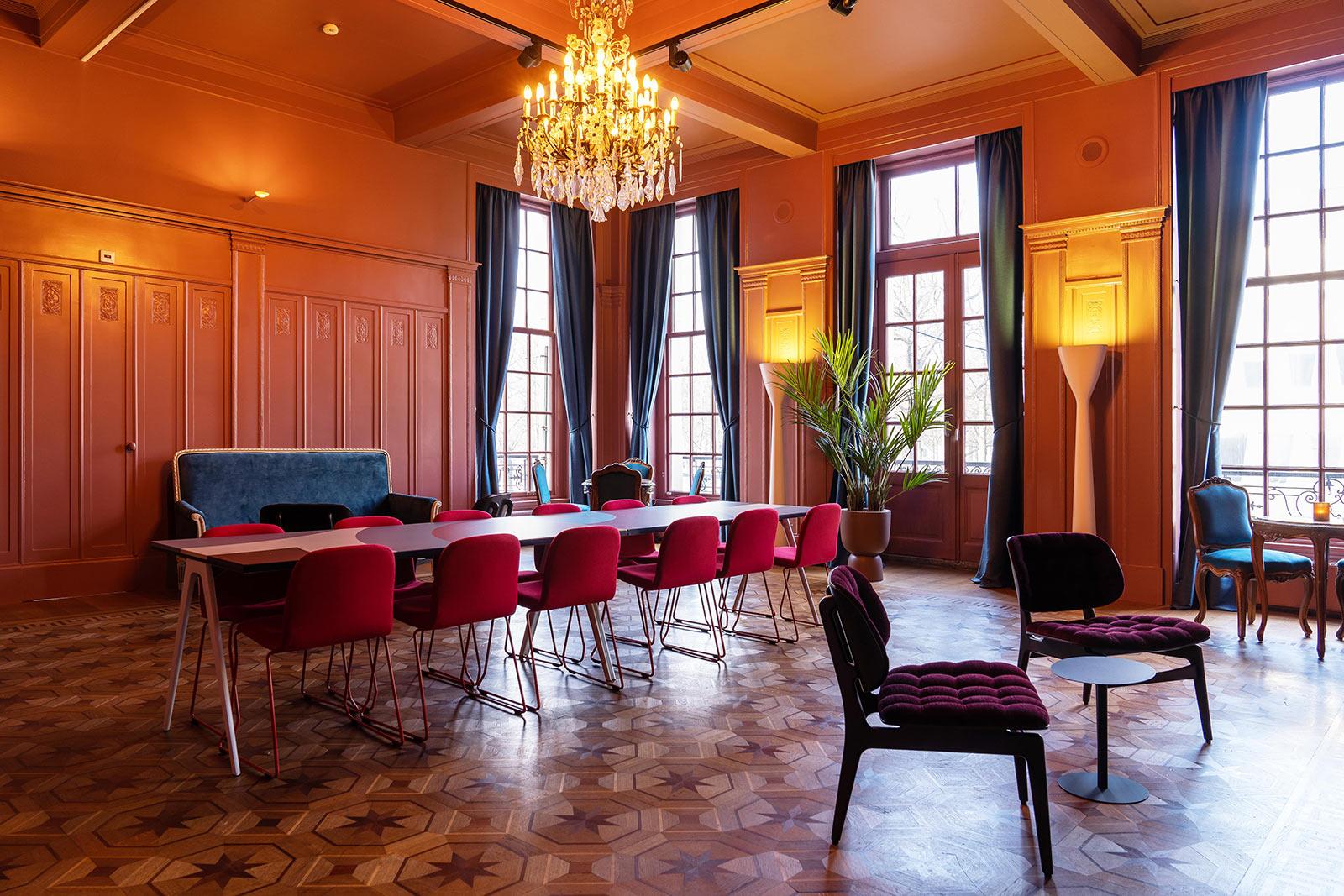
Willem-I-foyer in the National Theatre with the former floor from Lange Voorhout Palace
References
* René Cleverens, Paleis Lange Voorhout, Amsterdam (De Bataafsche Leeuw) 1994, p. 105.
** F.H. Schmidt, Pieter de Swart. Architect of the Eighteenth Century, Zwolle (Waanders Publishers) 1999, p. 164.
Written with thanks to Babs van Eijk and Vera Huigen
More Escher Today

18 October 2025
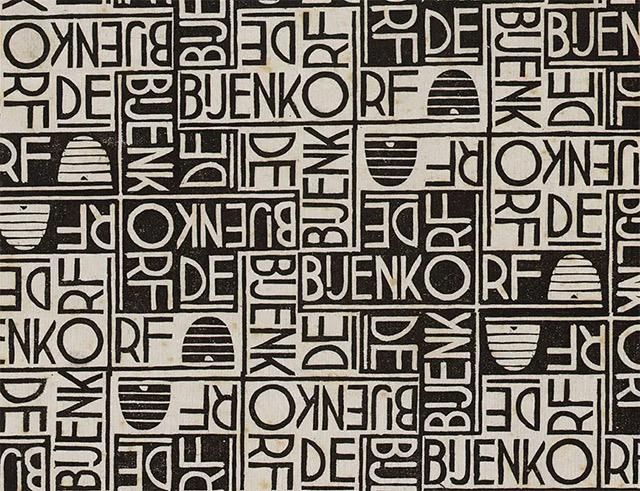
M.C. Escher's Word-Puzzle Wrapping Paper for De Bijenkorf
Doris Schattschneider, Escher expert and retired professor of mathematics, was a guest speaker at the annual Bridges mathematics conference. This year, the conference was held in Eindhoven in July. She presented her research into Escher's design for wrapping paper for the Bijenkorf department store, for which Escher turned to his hobby of what he called "word-puzzles".
7 August 2025
Letters full of admiration: a special loan
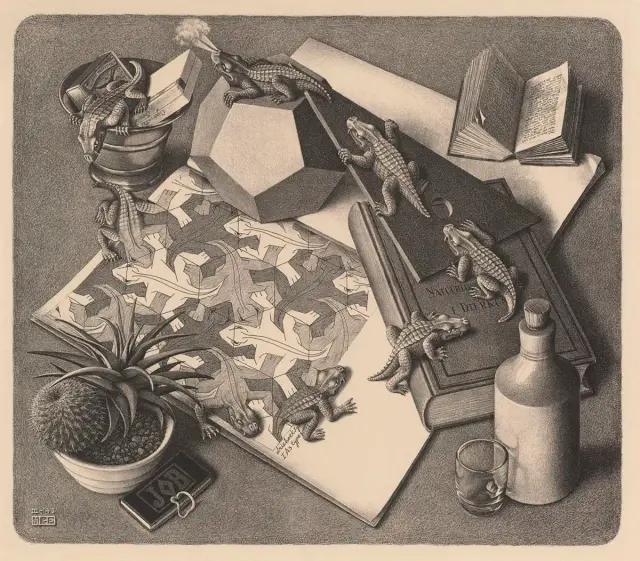
During his lifetime, M.C. Escher received several letters from enthusiasts sharing their admiration for his work. Not all of these have survived, which makes it very special when relatives lend such letters to a museum. The granddaughter of Hendrik Dekker temporarily loans his carefully written letter about the print Reptiles (1943) and Escher's reaction to it to Escher in The Palace. The handwritten correspondence will be on display from 18 March to 14 September 2025.