
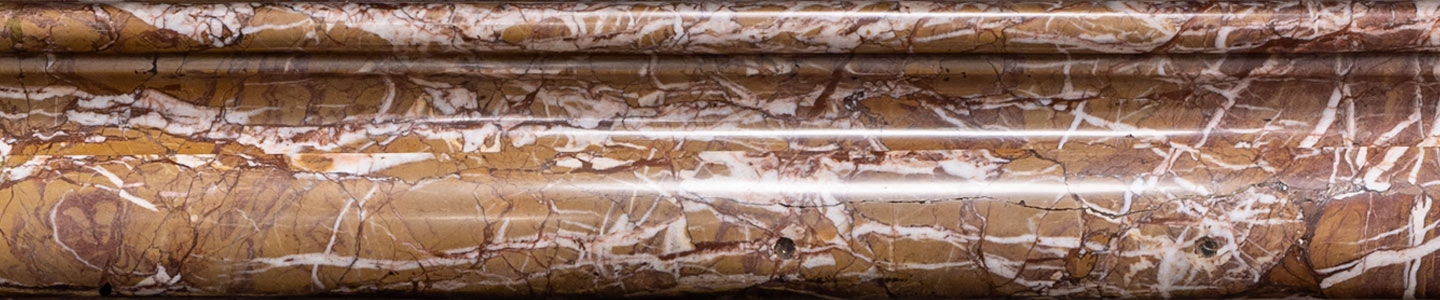
It is no secret that the palace on Lange Voorhout has a rich history. The building, which has housed ‘Escher in The Palace’ since 2002, was designed by Pieter de Swart for Anthony Patras – a wealthy politician who wielded considerable influence in the Dutch Republic. Upon its completion in 1764, the property was therefore named Huize Patras. Prins Hendrik, nicknamed the Seafarer, purchased it on 1 February 1848, after which it became a palace of the royal family. Prior to that, the house had had various occupants, and in 1811 Napoleon Bonaparte and his wife Marie Louise of Austria even stayed there for a few days.*
However, most people know Lange Voorhout Palace as the winter palace of Queen Emma, the Queen Mother. Emma became the owner of the city palace in 1896 through her brother-in-law, Prince Hendrik. Following the marriage of her daughter Wilhelmina in 1901, she moved into Lange Voorhout Palace and would continue to live there until her death in 1934.** In 1990, Princess Juliana sold the city palace to the municipality of The Hague; a key condition of the sale was that the palace would be given a cultural purpose.***
As the building has had many different occupants over the years, it has been renovated and altered on several occasions. Prince Hendrik made only minor alterations between 1848 and 1879, whilst Queen Emma, the Queen Mother, took a more radical approach between 1898 and 1901. This gave rise to the palace’s current interior. A striking feature of this interior is the palace’s many chimneypieces. In 2025–2026, Jan van ’t Hof, a specialist in architectural history at the Cultural Heritage Agency of the Netherlands (RCE), conducted research into the chimneypieces and their history. This research was facilitated by Escher in The Palace; you can read the preliminary findings in this issue of Escher Today.
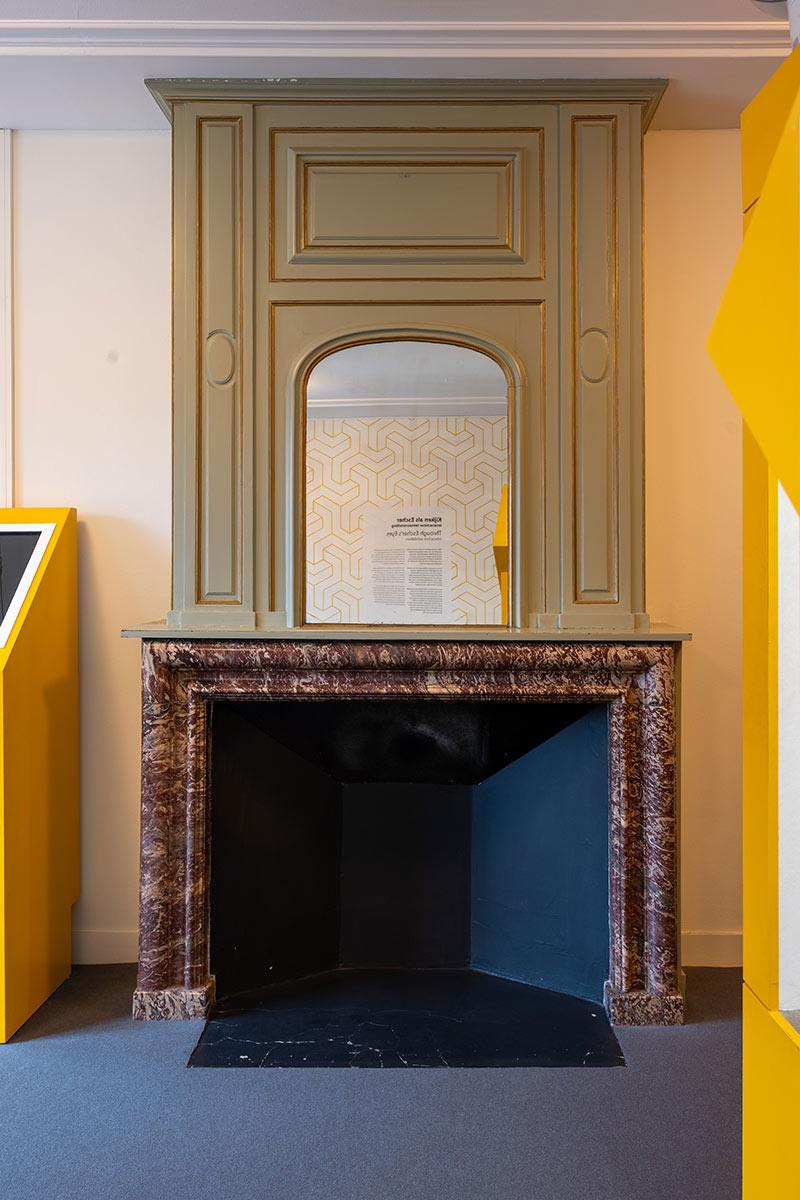
A chimneypiece dating from around 1700, made of German limestone from the Aumenau quarry in the Lahn region. Photo: Cultural Heritage Agency of the Netherlands, Michel Mees 2026
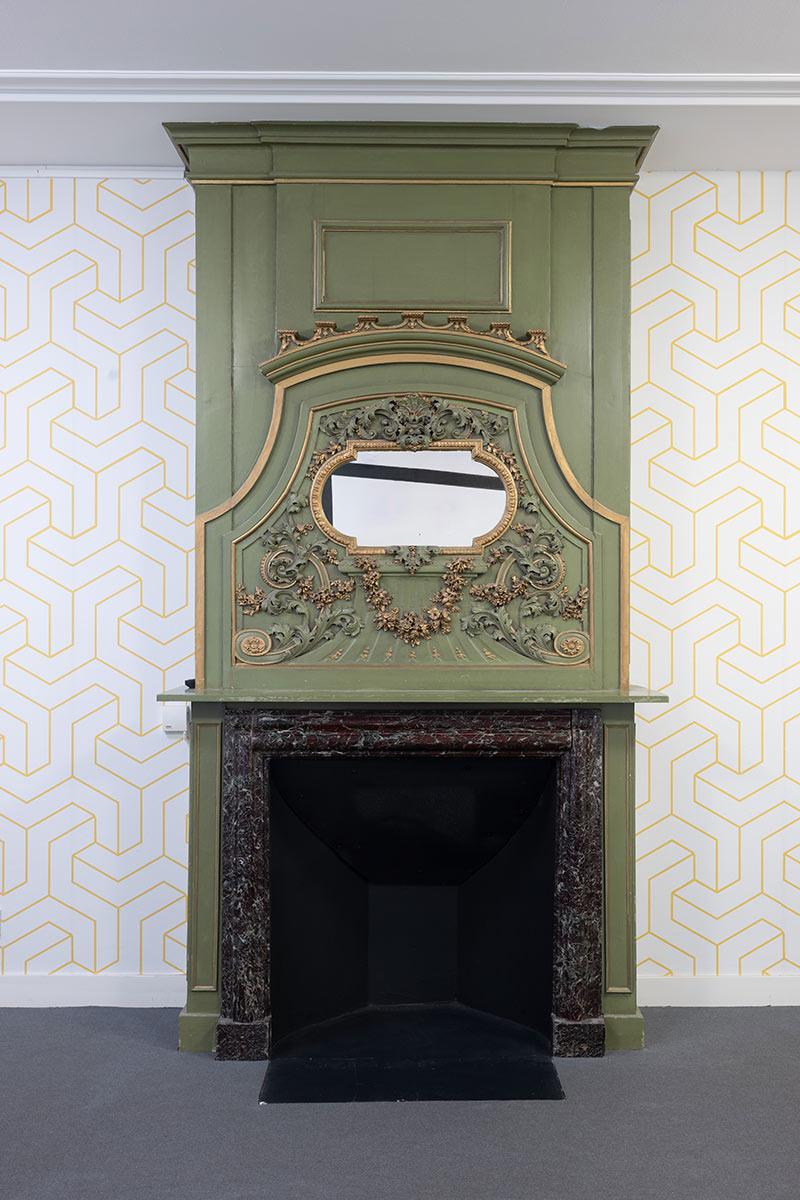
A chimneypiece dating from around 1700, made of red-green Italian serpentinite, known as ‘Rosso Levanto’ after its colour and place of origin. Photo: Cultural Heritage Agency of the Netherlands, Michel Mees 2026
What is a chimneypiece?
Chimneypieces were formerly intended primarily to frame the hearth, which was, of course, essential in the days before central heating. They also comprised a flue behind a breast – the section above the hearth that collects the smoke and directs it into the flue – which extended up to the ceiling. The smoke eventually left the house via the chimney on the roof. In stately homes, such as Emma’s city palace, the chimneypiece and hearth were always part of the interior. Even when heating was no longer provided by an open fire but by peat, coal and, later, gas stoves – which could function without a frame – chimneypieces remained a prominent feature of the rooms. This was partly because, from the end of the eighteenth century onwards, the chimneypieces were adorned with clocks, vases, floral arrangements, and other decorative objects. A chimneypiece was therefore not only a source of heat and light, but also a place where life came together.
There are more than twenty chimneypieces scattered throughout the palace, the majority of which are accessible to visitors. The chimneypieces have been examined as part of a wider study into the use of natural stone and into chimneypieces in the Netherlands. This multi-year study is ultimately intended to result in various lectures, publications, and databases. The research is still in full swing, but nevertheless, some preliminary conclusions can be drawn about the chimneypieces at Escher in The Palace.
Notable examples
Certain categories of chimneypieces stand out in particular, for example because of the materials used or their quality. The first group consists of a number of chimneypieces that originated from Huis Fagel on Noordeinde. These chimneypieces can be traced back to the designs of Daniel Marot, a well-known interior designer who also lived on Noordeinde and introduced many French stylistic elements to the Netherlands. The chimneypieces he designed usually consisted of a rectangular, simply framed firebox, surmounted by a mirror or a painted decorative panel. When the chimneypieces were removed from Huis Fagel and relocated to Lange Voorhout Palace, their original context was lost. The chimneypieces were originally part of an overall design, including the colour scheme of the room, but the interconnection between them had already been lost, partly due to the disappearance of mirrors and paintings. Nevertheless, several chimneypieces remain of interest, such as the three rectangular chimneypieces in the rooms at the front of the palace’s second floor, which stand out in terms of their choice of materials: they are made of German Lahn marble, Italian Rosso Levanto marble and French Trets marble. These stones were rarely, if ever, used in the Netherlands at the time, which raises the question of who actually chose them – the client or the designer – and how they arrived here – in principle by sea, but as a chimneypiece kit or in the form of blocks?
The word ‘marble’ can be a source of confusion, as geologists use it exclusively to refer to metamorphosed limestone, whilst the Greeks, who coined the term, used it to describe any stone that takes on a lustre when polished. When limestone undergoes metamorphism, the fossils that were originally visible disappear and a new crystalline structure forms. Fossils such as molluscs and corals are still clearly visible in various Belgian red ‘marbles’ – which are actually fossilised coral reefs – an example of which can be seen on the first floor of the palace.
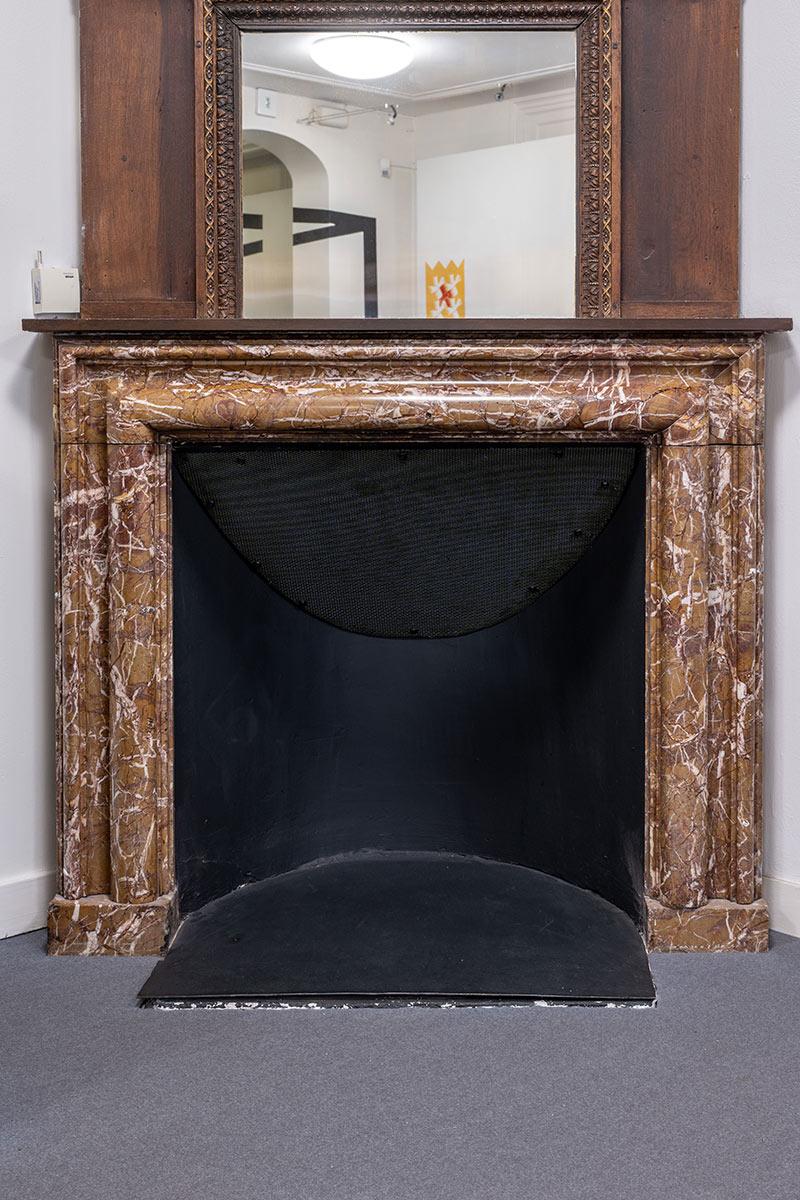
A chimneypiece dating from around 1700, made of French limestone known as ‘Trets’, one of the chimneypieces on the second floor that originated from Huis Fagel on Noordeinde. Photo: Cultural Heritage Agency of the Netherlands, Michel Mees 2026
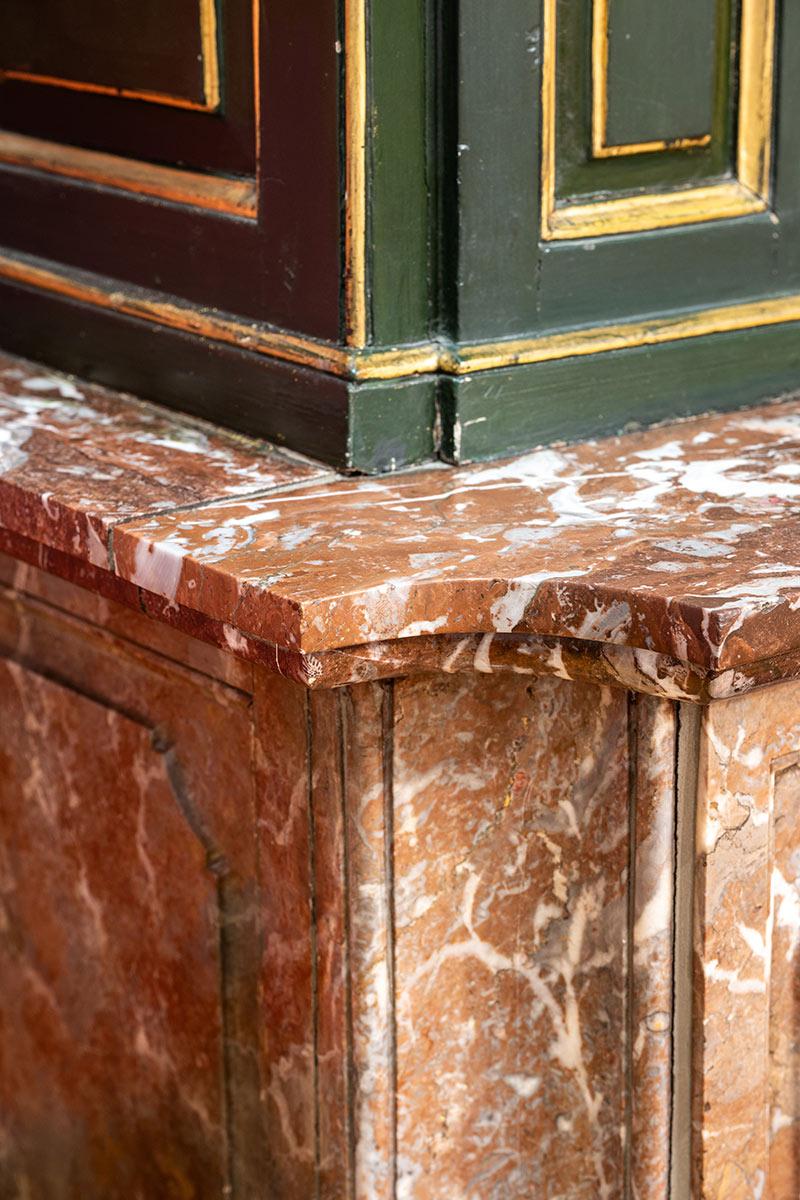
A chimneypiece on the first floor made of red reef limestone, formed when Belgium was still a subtropical sea. Irregularly shaped fossils can still be seen in the red marble. Photo: Cultural Heritage Agency of the Netherlands, Michel Mees 2026
Several chimneypieces on the second floor of the palace therefore date from around the year 1700 and are of interest because of their shape and, above all, their material. On the bel-etage, or main floor, a number of chimneypieces catch the eye precisely because of their architectural design. These are the chimneypieces in the two rooms on the right and the room at the centre rear (now Rooms 1, 2 and 3), which are executed in the Neoclassical style – a style that takes its inspiration from classical Greek and Roman architecture. We see rosettes, fluting (vertical grooves), festoons (garlands), palm fronds, strung sequins or coins, and an imperial head as a medallion. The design of the chimneypieces is closely related to that of the rooms; the same motifs recur regularly. In the chimneypiece at the back on the right (Room 2), there is a striking contrast between the ‘body’ of black Belgian stone and the white ornaments. Further research is needed to determine the age of the components, although it may well be that some of the panelling was fitted during the reign of Queen Emma, the Queen Mother, and designed to complement the chimneypieces.
On the same floor, the chimneypieces at the front left and rear left (in what are now Rooms 4 and 6) also originate from Huis Fagel. The chimneypiece in what is now the Palace Shop (Room 6) – formerly the dining room – is made of white Italian marble. It is known that this chimneypiece was installed in the Palace in 1900 by the Hague-based marble worker Laurent Philips. These decorative elements in the palace’s historic interior sometimes reveal interesting details when viewed up close. For example, in the room at the back on the left (Room 4) – formerly known as the Green Salon – there is a chimneypiece made of Belgian bluestone. Small fossils of sea lily stems are clearly visible in this stone; these are the accumulated, stalked calcareous skeletons of sea lilies. When they fossilise, the long stems often break into small, disc-shaped segments that resemble beads. In this way, examining a chimneypiece also offers a glimpse into the origins of the Earth.
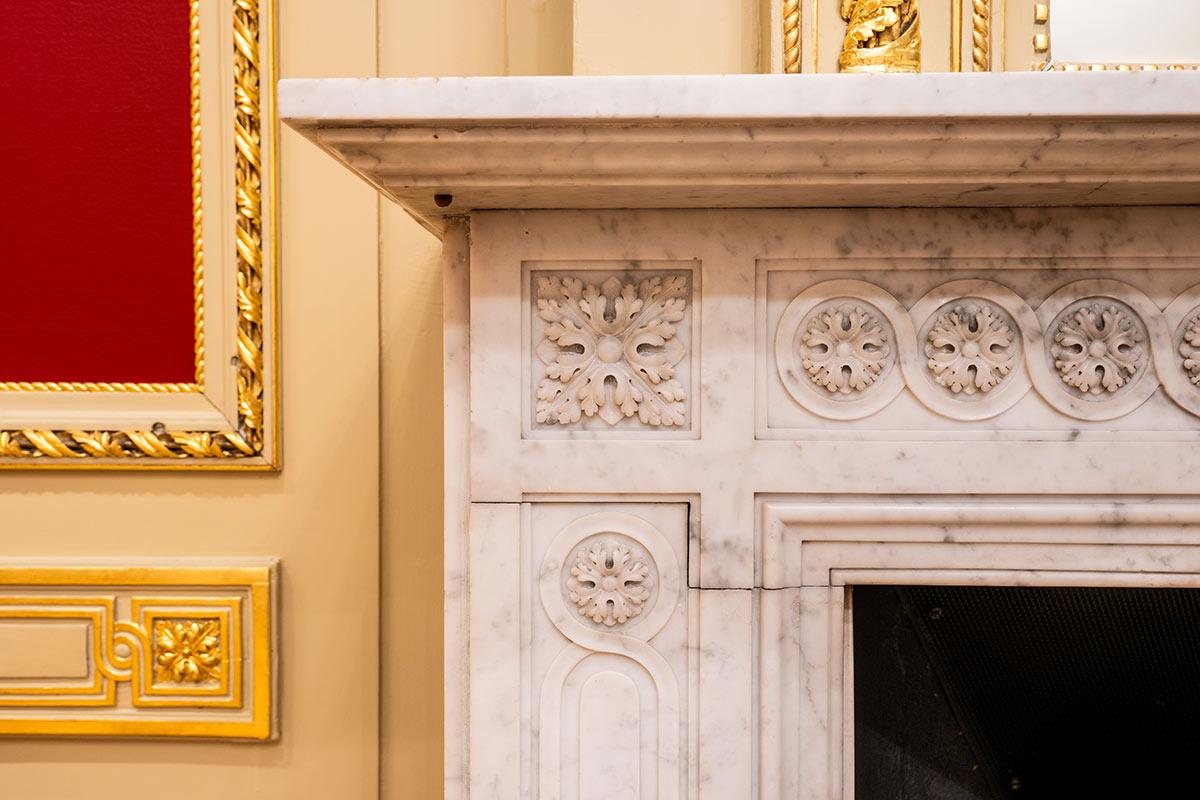
In this late 18th-century chimneypiece, crafted from white marble, the connection between the components via a bayonet joint is clearly visible. Photo: Cultural Heritage Agency of the Netherlands, Michel Mees 2026
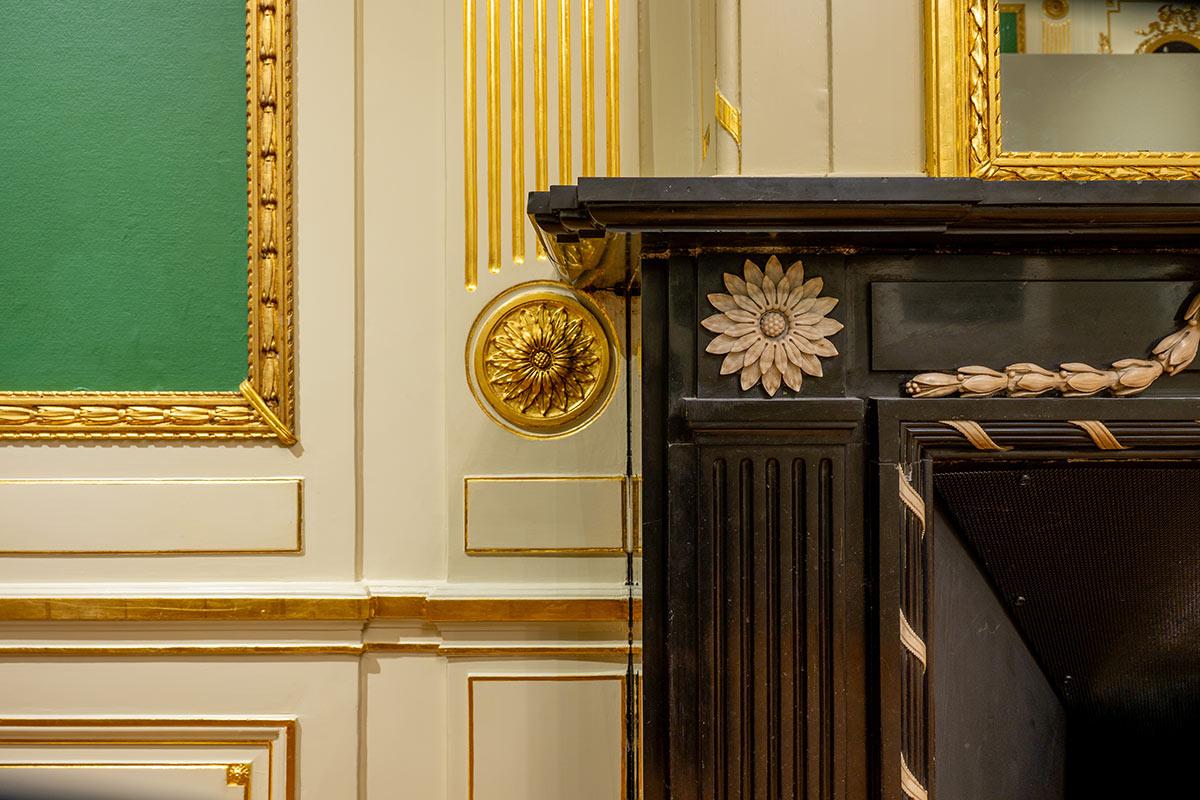
The neoclassical chimneypiece at the back on the right dates from the late eighteenth century; the room’s panelling, featuring rosettes, fluting and similar motifs, has been adapted to match it. Photo: Cultural Heritage Agency of the Netherlands, Michel Mees 2026
A magnificent ensemble
The origin of the chimneypieces remains partly a matter of debate: some were installed during the building’s construction, whilst others were added later. It is difficult to determine exactly which chimneypieces belong to which period. What is certain is that seven chimneypieces and other interior features from Huis Fagel were removed by the royal family and transferred to Lange Voorhout Palace, where they were reinstalled.**** In some cases, the chimneypieces were incorporated into a new interior, allowing them to blend perfectly into the space. This was the case, for example, in the dining room, the room that is now the Palace Shop.
As the palace houses more than twenty chimneypieces, they display a wide variety of styles. Alongside 18th-century examples featuring simple or, conversely, richly detailed undulating ornamentation, there are also neoclassical chimneypieces. These are mainly located on the bel-etage, the main floor which visitors enter upon arrival. The neoclassical chimneypieces are distinguished by their refined design, with decorative elements such as palm fronds, rosettes and medallions.
At Escher in The Palace, we fully endorse what Jan van ’t Hof has highlighted:
“All in all, there is a magnificent collection of chimneypieces on display, which would actually be worth a visit in its own right.”
Written with thanks to Jan van ’t Hof and Jula Gommeren
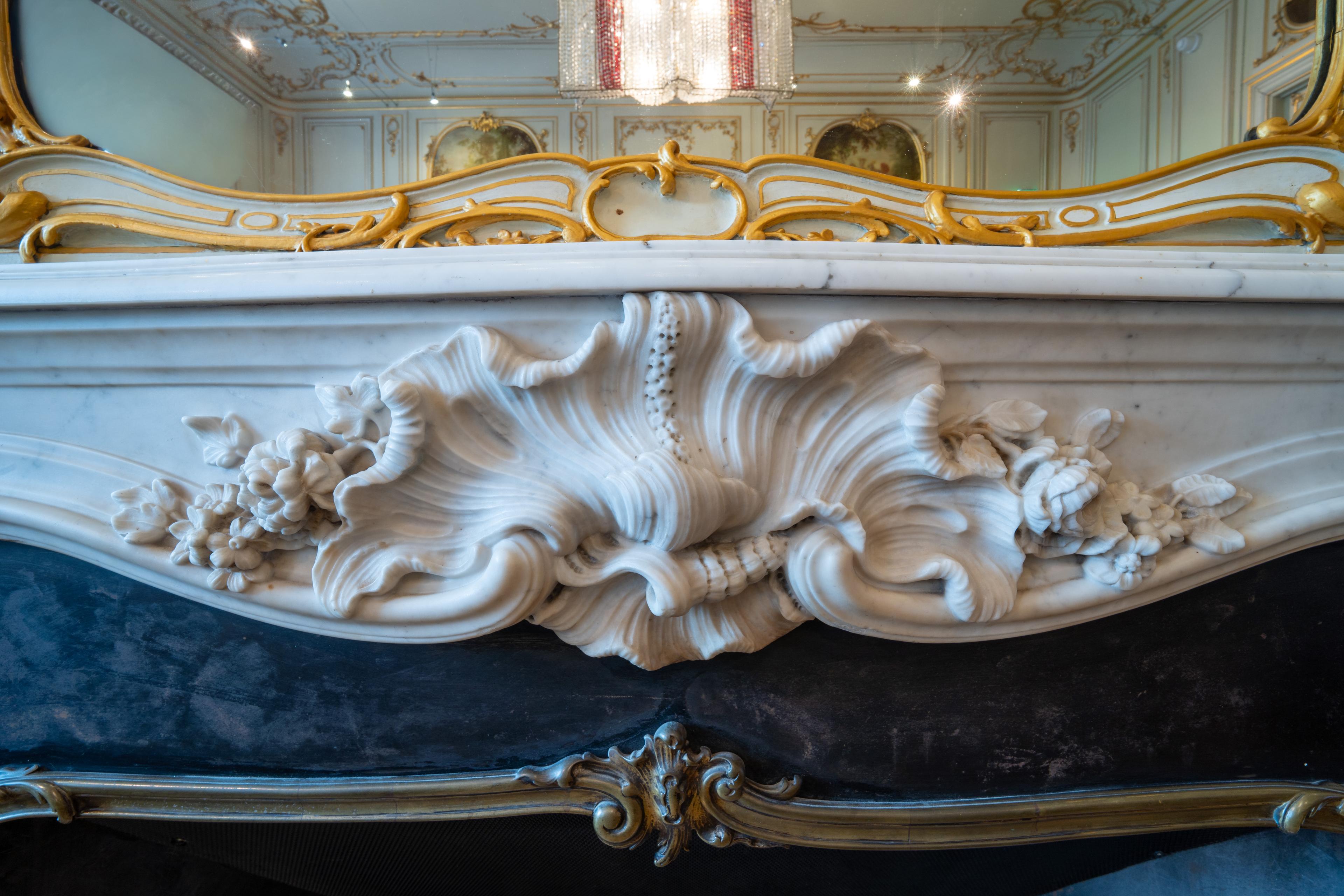
The central Rococo ornament, or rocaille, in the chimneypiece, which was installed in the Palace in 1900 but is itself older. Photo: Cultural Heritage Agency of the Netherlands, Michel Mees 2026
Sources
[*] René Cleverens, Paleis Lange Voorhout, Amsterdam (De Bataafsche Leeuw) 1994, p. 26. For the history of the various residents, see Chapter Two in the same publication (pp. 18–25).
[**] René Cleverens, Paleis Lange Voorhout, Amsterdam (De Bataafsche Leeuw) 1994, Chapter Four (pp. 35–44).
[***] De Telegraaf, 19 October 1991, p. T2 (available via: De Telegraaf » 19 Oct 1991 – Art. 1068 | Delpher).
[****] René Cleverens, Paleis Lange Voorhout, Amsterdam (De Bataafsche Leeuw) 1994, p. 40.
More Escher today
4 July 2026
A Remarkable Collaboration
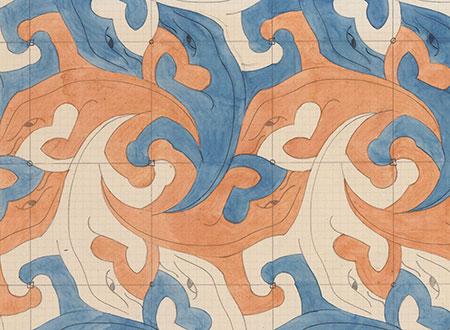
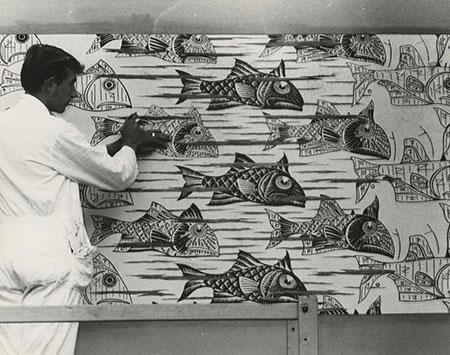
Painting apprentice Huug Vooys was 19 when he was invited to take part in an exceptionally special project: a mural no less than 48 metres long in the main PTT building, the post office on Kerkplein in The Hague. The design was by none other than M.C. Escher, who himself noted that he had possibly received "a most delightful commission" from the PTT. The large work was realised, but Escher did not execute the design himself - the honour fell to Huug Vooys.
20 May 2026
Perfect perspectives in Up and Down
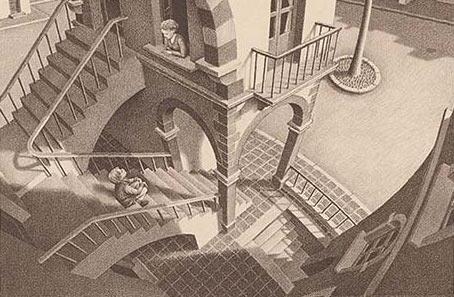
Escher’s fascination with the possibilities of perspective is already evident in his early prints. In these works, he combines the rules of classical perspective with an extreme vantage point. Later, he began to experiment more and used the rules of perspective to mislead viewers. In these works, the perspective lines are straight, but Escher realised that, in actuality, a curved line corresponds more closely to what our eyes see. In Up and Down, he achieves perfection in the application of curved perspective.