This website uses cookies

We use cookies and similar technologies on this website to analyze visits and to show you relevant messages on social media. By clicking 'Accept all' you give permission for their placement and for the processing of personal data obtained in this way, as stated in our privacy & cookie statement.
Our privacy & cookie statement:

Prints, drawings and applied art

Prints, drawings and applied art

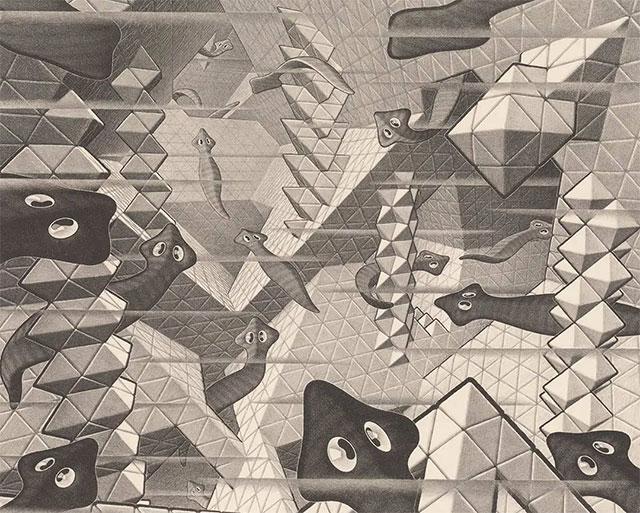
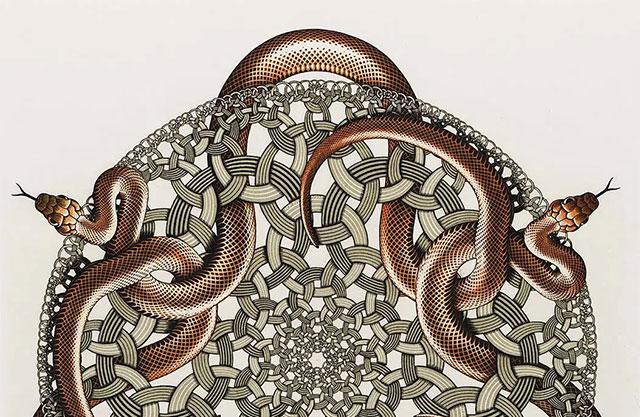
Here you will find all articles relating to a specific print, a combination of prints, drawings and preparatory studies, and the applied art created by Escher. The articles are arranged chronologically, ending with the last print he produced: Snakes.

Skull

Januari 1917

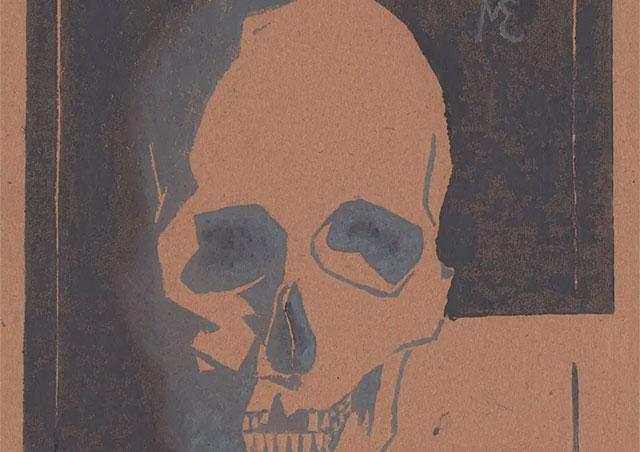
Skull

Escher created several skulls and skeletons, both as standalone works and as part of a poster or a monogram. This is the very first one, from January 1917.

Self-portraits 1917-1950

1917-1950

Self-portraits 1917-1950

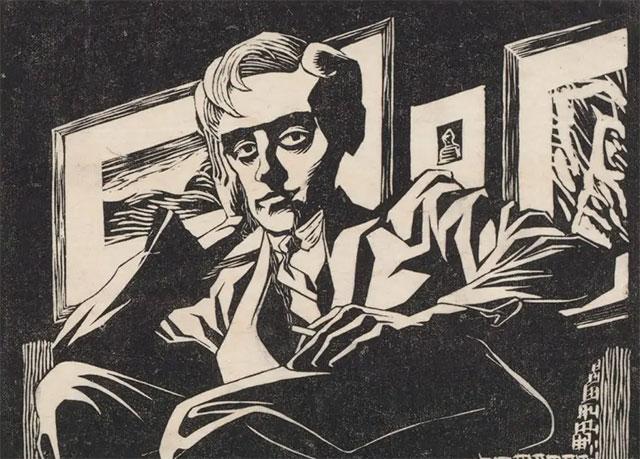
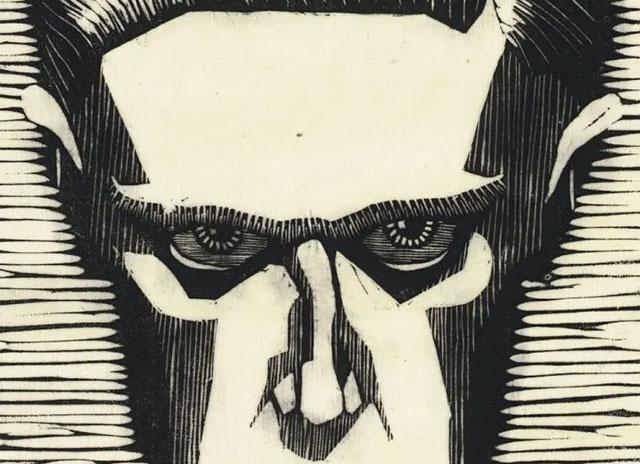
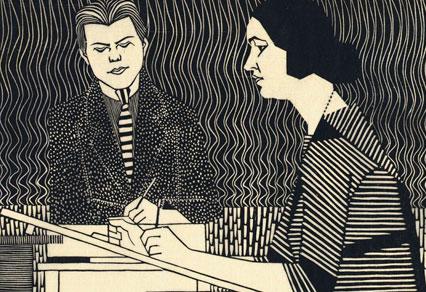
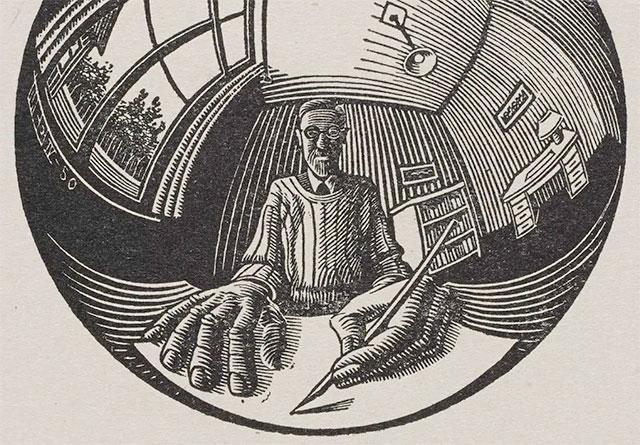
An article by former curator Micky Piller on the 12 self-portraits created by Escher.

Self-portrait

1919

Self-portrait

On 6 September 1919 Maurits Escher started his lessons at the School for Architecture and Decorative Arts in Haarlem. Within as little as a week he had already made a radical decision: he would switch from architecture to graphic arts.

A Special Pet: The White Cat

1919

A Special Pet: The White Cat

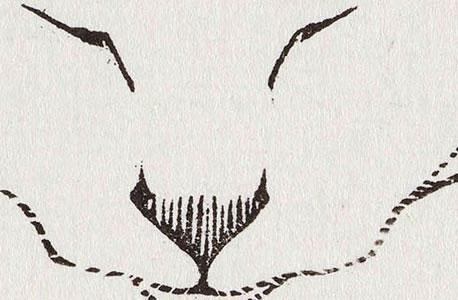
Escher in Het Paleis is always on the lookout for works by M.C. Escher to enrich the collection. For years, our wish list has included a small number of Escher prints that we do not yet own, but these are rare and difficult to come by. High on the list was Escher’s woodcut White Cat (1919), a tender work that Escher created of his pet during his student days in Haarlem.
Wall mosaic in the Alhambra

October 1922

Wall mosaic in the Alhambra

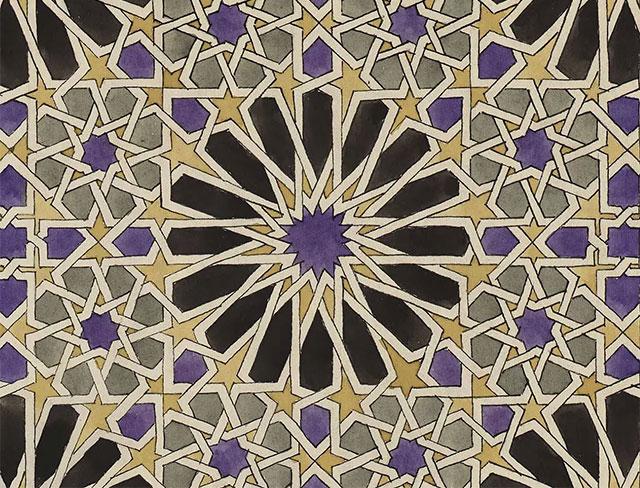
On 20 October 1922, Escher created a drawing that — in retrospect — would have a major impact on his life. He made his first voyage by freighter that autumn, from Amsterdam to the Spanish port city of Málaga. The ship also moored in Alicante and Taragona, after which Escher traveled by train to Barcelona, Madrid, Avila,Toledo and Granada. There he visited the beautiful Alhambra.

Announcement card for first solo exhibition

1923

Announcement card for first solo exhibition

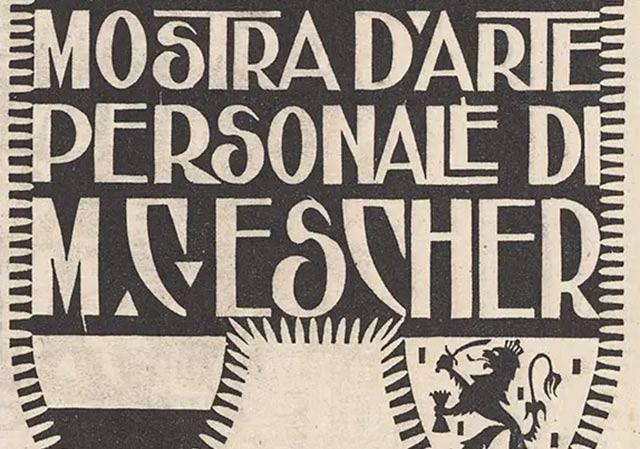
13 August 1923 saw Escher’s first solo exhibition open at the ‘Circolo Artistico’ in Siena. A milestone, but he paid very little attention to it. He was in love with Jetta Umiker and all his thoughts and actions were focused on her.

Escher's palm trees

1923-1954

Escher's palm trees

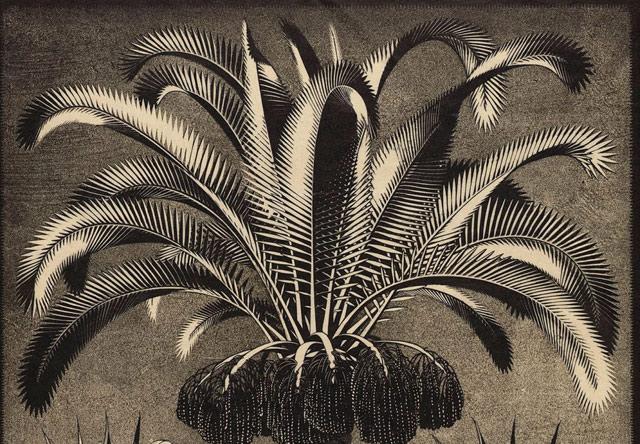
Maurits Cornelis Escher saw something very special in the iconic palm tree. He has never commented on it, but it is striking how often it recurs in his work. The first of these was created in July 1923—a stylised palm tree with fronds like parasols, hanging bunches of palm fruits, the scaly trunk and a halo that seems to surround the tree.
 

Saint Vincent, martyr

July 1925

Saint Vincent, martyr

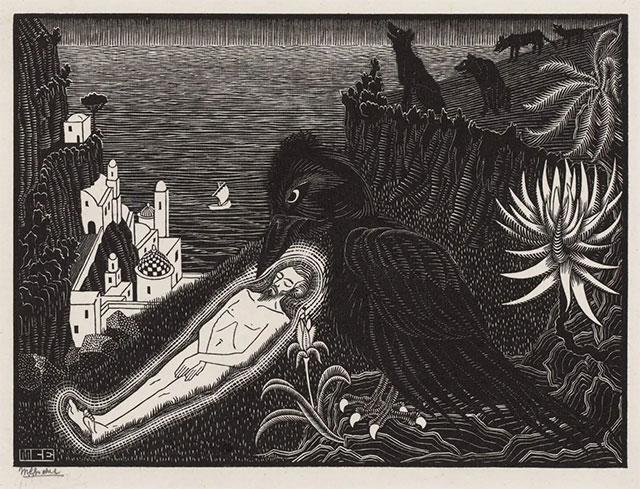
In this woodcut the gigantic raven stands out, looming protectively over the radiant saint. On a cliff some howling wolves look down in frustration. Escher complements the composition with a town that can be seen in the depth.

The Fall of Man

March 1927

The Fall of Man

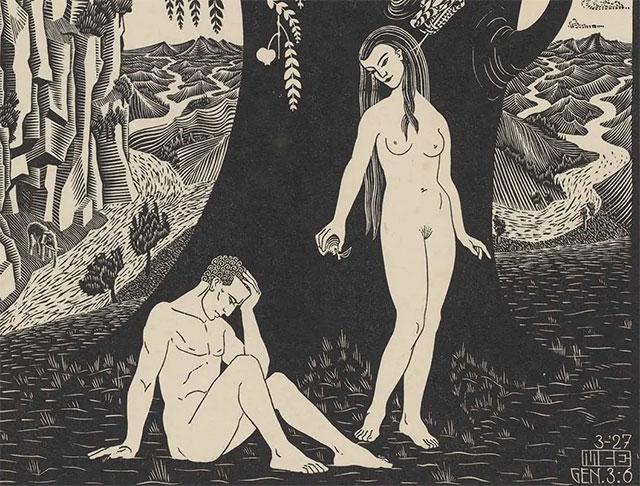
The Fall of Man shows Adam and Eve in the Garden of Eden at the moment they have eaten from the tree of knowledge of good and evil, which God had forbidden. They were tempted by the devil in the form of a serpent, who first convinced Eve, before Adam too ate the forbidden fruit. Escher depicts the two just after Adam has eaten from the apple and is sitting on the ground in dismay, knowing they have made a grave mistake.

Rowing towards the Castle in the Air

January 1928

Rowing towards the Castle in the Air

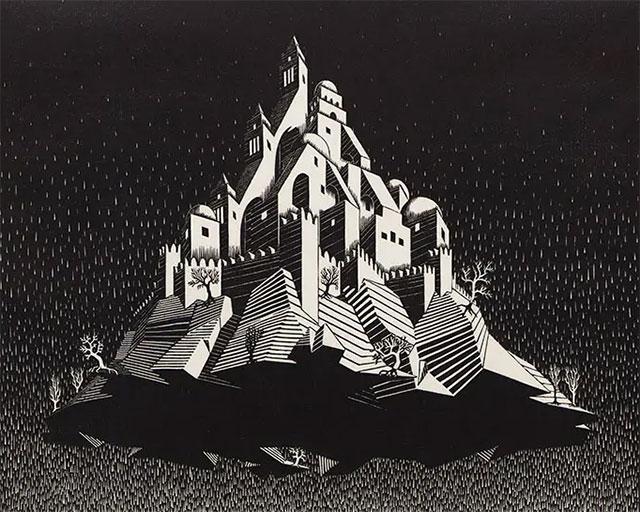
The Escher archive at the Kunstmuseum The Hague (formerly Gemeentemuseum) contains a small storybook from 1898, Escher’s birth year. He read from it to his sons a lot. Given the publication date, one might well imagine that his father had done the same for him. The storybook features a story that served as the inspiration for a woodcut from January 1928: Castle in the Air.
 

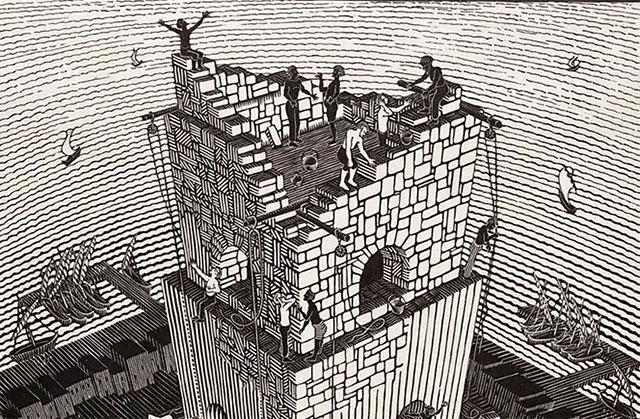
State of confusion (Tower of Babel)

Februari 1928

State of confusion (Tower of Babel)

To create confusion. That was what God had in mind when he made the people who were building a tower to heaven all speak different languages. In no time at all, it was chaos, and the construction was stopped immediately. If you can no longer talk to each other, how can you continue to build together at such a height?

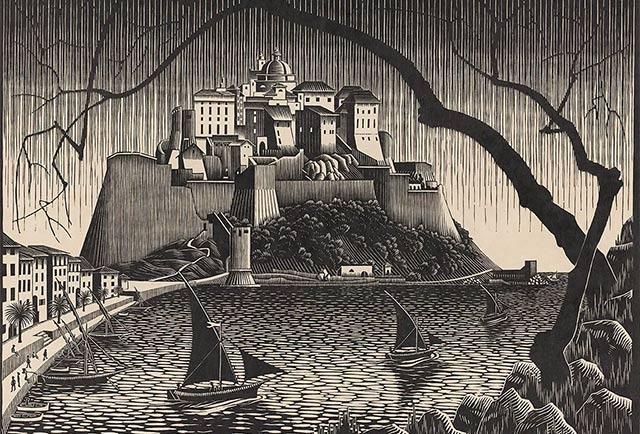
Citadel of Calvi

October 1928

Citadel of Calvi

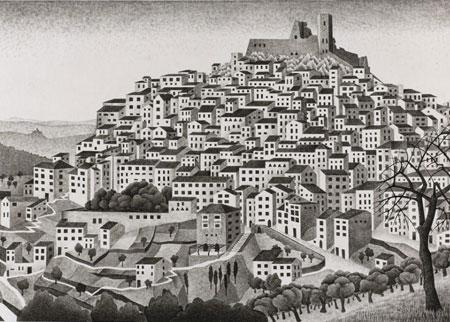
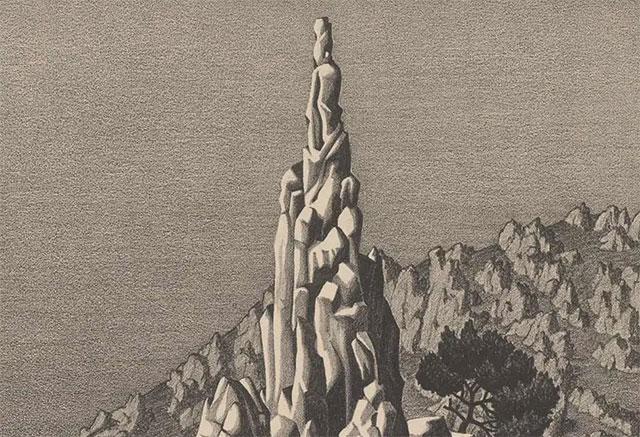
Escher visited the desolate island of Corsica several times. He was fascinated by the rock formations, the dizzying elevations, the mountain ranges, chasms, rivers, bays and coastline. He was specifically enamoured with the north-eastern town of Calvi and its massive citadel. This 15th century Genoese stronghold is situated on a rock on a headland and dominates the harbour and boulevard of the city.

First lithograph and Schaffhausen

July 1929

First lithograph and Schaffhausen

Between 1927 and 1938, the Escher family spent almost every summer in the Swiss town of Steckborn, with Jetta’s sister Nina and her husband Oskar Schibler. In the spring of 1929, Escher had already made a trip to the Italian Abruzzo region. The tour yielded 28 drawings, one of which he developed into a lithograph in Steckborn, the first one of an Italian landscape.
 

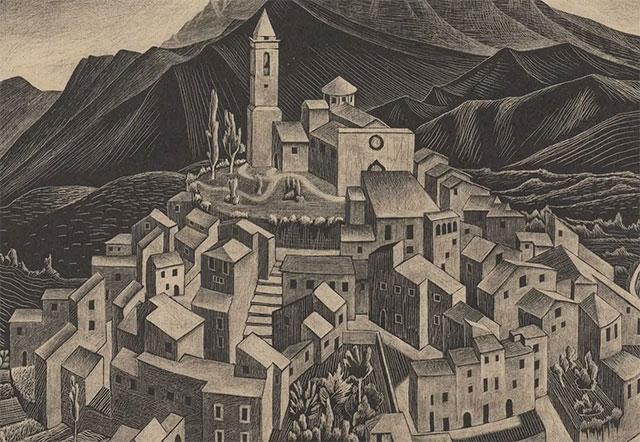
A Mysterious Landscape: Pettorano sul Gizio

October 1929

A Mysterious Landscape: Pettorano sul Gizio

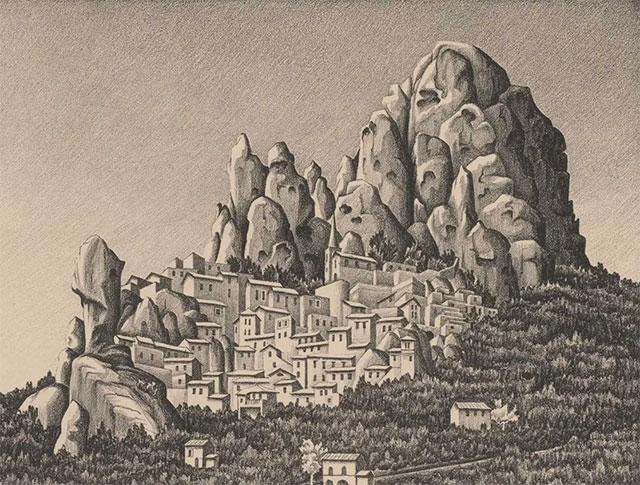
Belvedere (1958), a favourite with our visitors, has a magical power that touches millions of Escher fans around the world. What appears at first to be simply a fantastical building turns out to be an impossible structure. It is not only the foreground of the print that has been a mystery. For many years, the landscape in the background was too. 

Genazzano

November 1929

Genazzano

In November 1929, Escher produced a print that for once was not the direct result of a journey he had made that spring. From 1925 to 1936, he followed a fixed pattern of travelling through Italy in the spring. In the autumn and winter following these trips, he fleshed out his sketches and photos into prints. But in May 1926, things were different.
 

The Cattolica di Stilo

1930

The Cattolica di Stilo

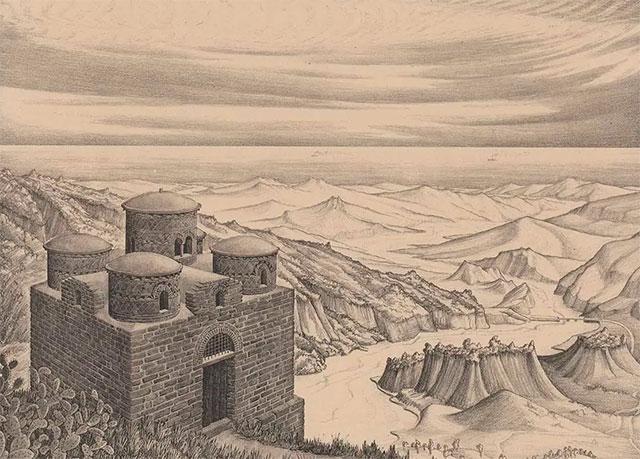
On his journeys through untouched parts of Italy in the spring and summer, enjoying himself was not Escher’s only aim. These hikes were also very much geared towards preparing for prints that they might inspire. In doing so, he almost always takes reality into his own hands. A good example is the Cattolica di Stilo

Rossano

1930-1931

Rossano

On 22 May 1930, Escher and his travelling companions were in the town of Rossano in Calabria. They visited the Oratorio di San Marco, an oratory from the 10th century that is one of the most important examples of Byzantine art in Italy.

Palizzi, Calabria

1930-1931

Palizzi, Calabria

The autumn and winter months of 1930-1931 were a productive period for Escher. In the spring he travelled through the Italian provinces of Campania and Calabria, after which he produced a whole series of woodcuts and lithographs in the autumn. 13 in total. These works bear the poetic names of the places he visited: Palizzi , Morano, Pentedatillo, Stilo, Scilla, Tropea, Santa Severina, Rocco Imperiale, Rossano.

Pentedatillo

1930-1931

Pentedatillo

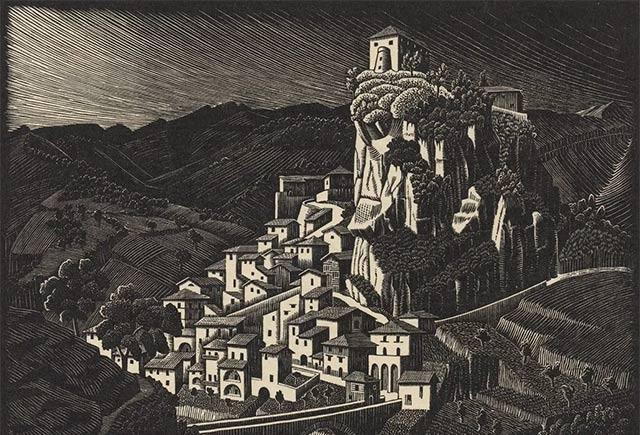
In the autumn and winter of 1930-1931, Escher developed the sketches he had made and photographs he had taken during his spring trip through the Italian provinces of Campanile and Calabria together with his friends Giuseppe Haas-Triverio, Roberto Schiess and Jean Rousset. He was so impressed by the mountain village of Pentedattilo that he produced two woodcuts and a lithograph of it.

Emblemata

1931

Emblemata

Former curator Dunja Nadjézjda Hak discusses Escher’s Emblemata and the subsequent history of this genre, which emerged from a collaboration between an artist and a writer

Butterfly (Emblemata)

1931

Butterfly (Emblemata)

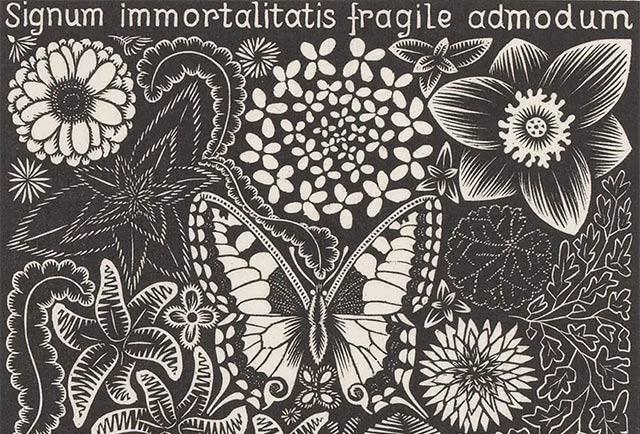
The Emblemata series consists of 25 woodcuts, including Butterfly. In this woodcut Escher puts a butterfly (a small tortoiseshell, a swallowtail, who knows?) in a richly ornamented palette of flowers and plants. Art historian G.J. Hoogewerff provided these Emblemata with a motto in Latin and a poem in Dutch.

A light in the dark

1931

A light in the dark

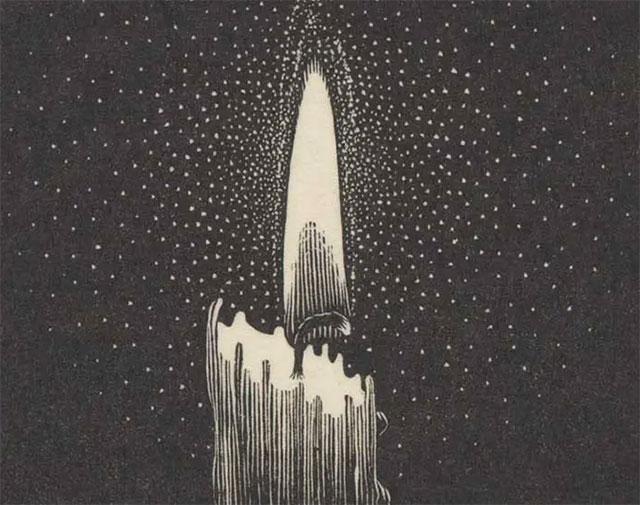
Around 1930, Escher was not a happy man. He struggled with his health, he was unable to sell his work, he had financial difficulties, and he lacked inspiration. He even thought about completely ending his artistic career. It was the art historian G.J. Hoogewerff who drew him out of his dip.

Retreat

1931

Retreat

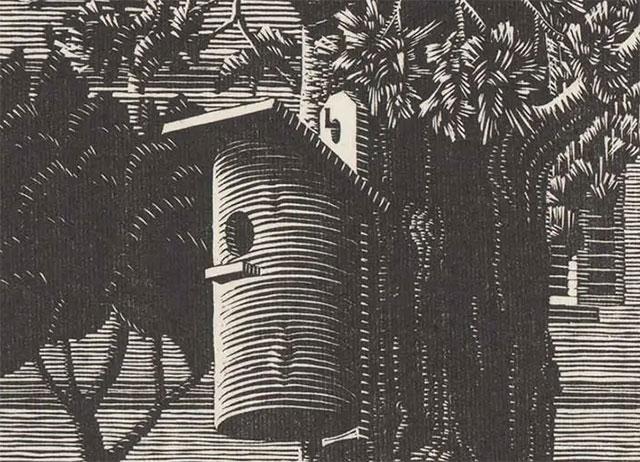
Between March and June 1931, Escher created his Emblemata, a series of small woodcuts that were accompanied by a motto in Latin and a poem in Dutch. One of those prints is Retreat. It features a birdhouse, hanging from a tree. An innocent image suffused with new significance by the title.